Table of Contents
InvestorJustice.org | Regulatory Timing Series
For companies or legal counsel caught off-guard, December record demands can feel rushed.
But shortened deadlines near year-end are not unusual, they are operational necessity.
Why Deadlines Compress in December
Financial regulators face December pressure from:
- Budget cycle closures
- Enforcement target windows
- Staffing transitions and retirements
- Fiscal and legislative reporting deadlines
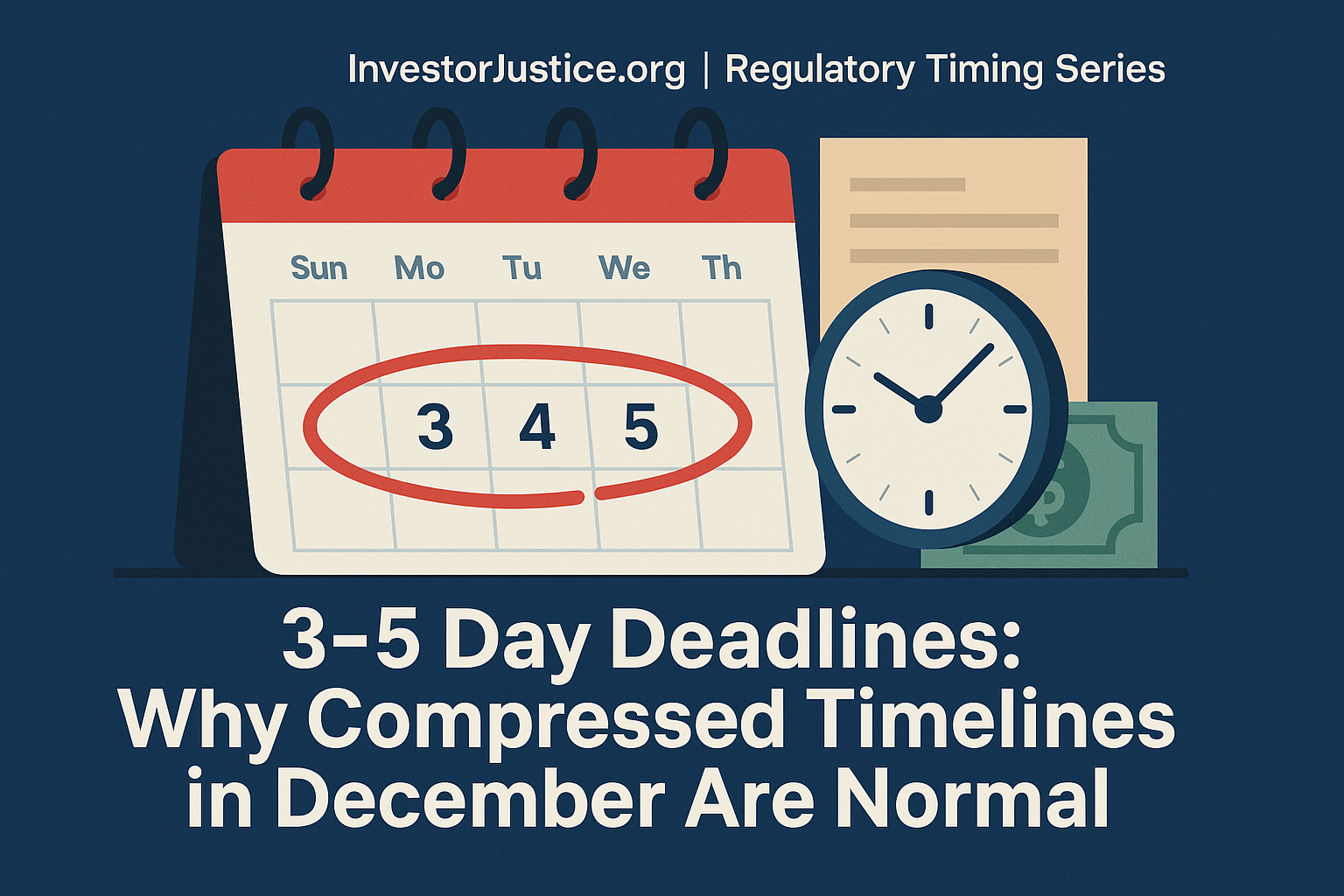
A request that allows 10–14 days in May may allow only 3–5 days in December especially if:
- The company has been on notice
- Records are already known to exist
- Delays compound consumer harm
This Is Not Punitive, It’s Procedural
Compressed timelines reflect:
- Known risk windows (especially for seniors)
- Case timelines that must conclude before reorgs
- Urgency caused by stonewalling or repeated delays
These demands are proportional to the need for resolution and prevent cases from stalling into the new year.
What Compliance Teams Should Expect
If a platform has:
- Previously received outreach from DFPI or another regulator
- Failed to fully cooperate or produce records
- Deflected jurisdiction or cited foreign entities
They should be prepared for shorter timelines and firmer consequences in December.
The Takeaway
End-of-year enforcement operates on a different calendar.
Shorter windows do not signal overreach, they signal finality.
If December deadlines arrive, know this: