Table of Contents
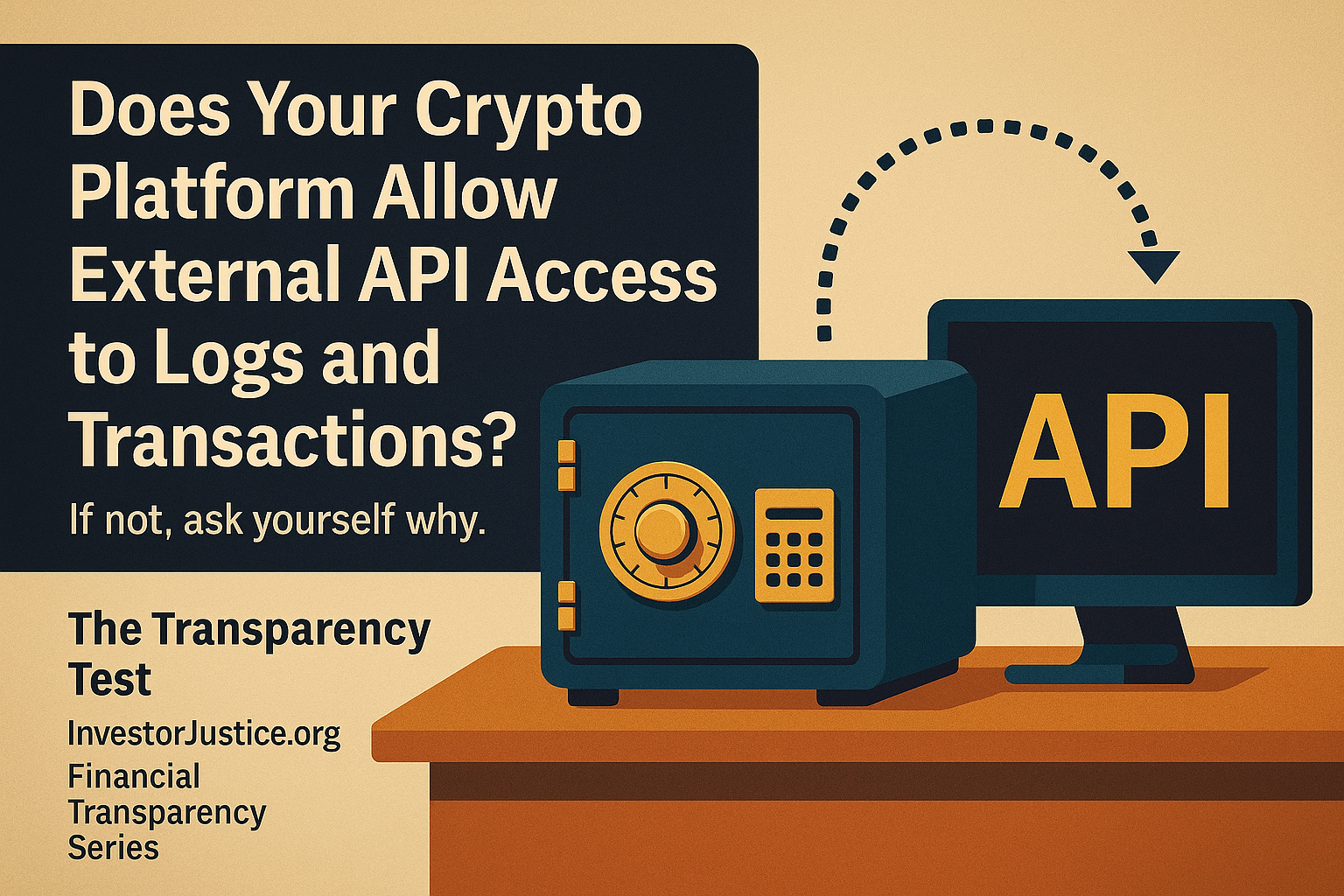
If not, ask yourself why.
The Transparency Test
Most investors judge a crypto platform by its yield, speed, or marketing polish.
Few ever ask the one question that truly matters:
Can an independent third party audit what actually happens behind the scenes?
If your crypto exchange, lender, or wallet provider does not allow secure third-party API access to transaction and custody logs, then your visibility is limited to what they decide to show you.
In traditional finance, that would be unthinkable.
Every regulated institution, from banks to broker-dealers, must maintain auditable records accessible to both clients and regulators.
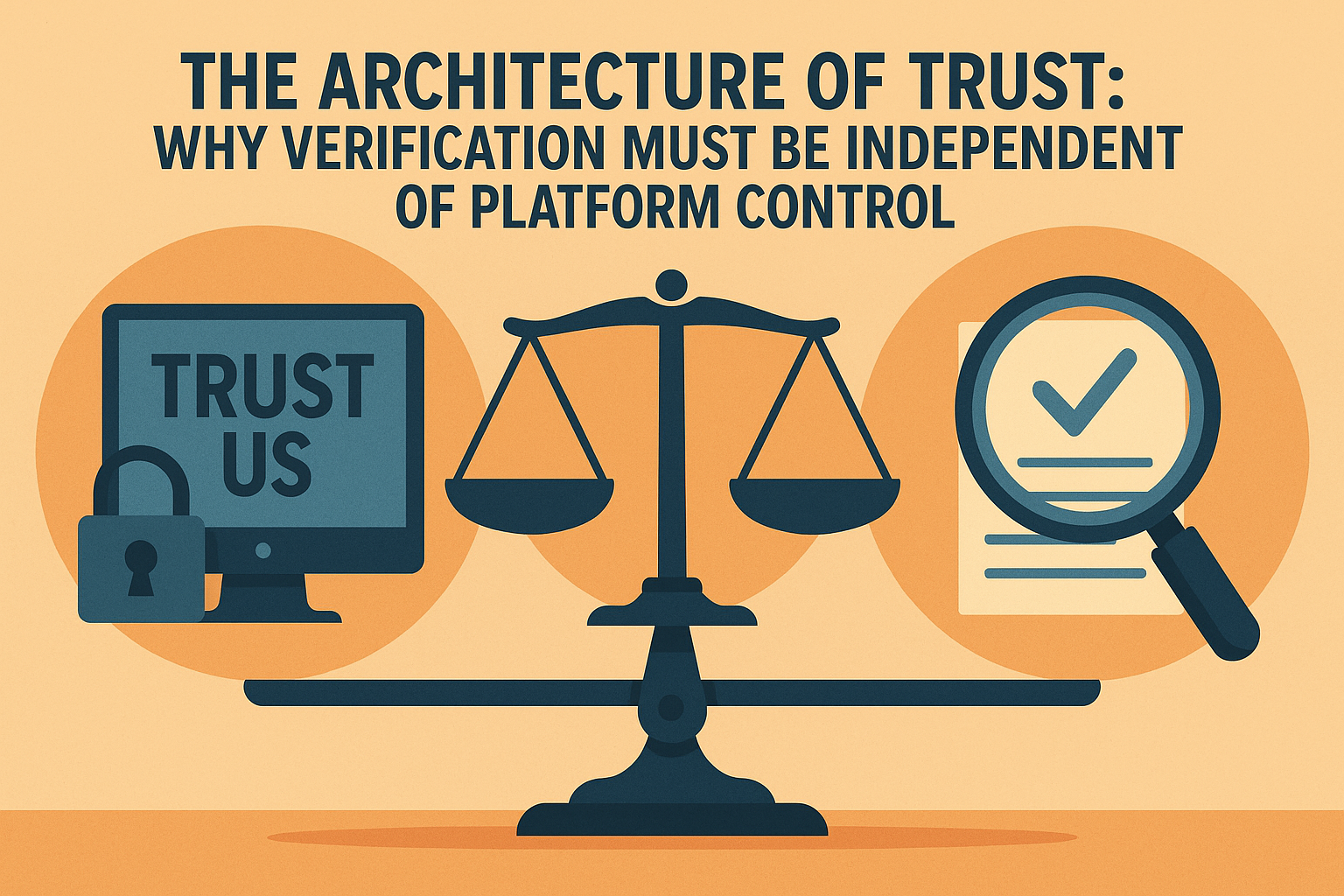
Crypto platforms that block or restrict API access are effectively asking for trust without verification; the oldest trap in financial history.
The Hidden Cost of Closed Systems
Platforms often justify their opacity under the guise of “security” or “proprietary systems.”
But the reality is simpler: data control equals narrative control.
When third-party access is restricted:
- Independent audit becomes impossible.
- Consumer verification depends entirely on the platform’s internal honesty.
- Accountability collapses into a private, unverifiable promise.
These are the same conditions that led to repeated scandals across the crypto sector from mispriced collateral to fabricated proof-of-reserves reports.
The API as the Modern Audit
Open, read-only API endpoints are not a luxury, they are a baseline for trust.
They allow:
- Regulators to monitor transaction integrity.
- Auditors to verify claims without interference.
- Users to confirm their balances and histories independently.
Transparency through API isn’t about “giving away secrets.”
It’s about proving that what you say is true, in real time, not after a collapse.
A Simple Investor Rule
If a platform won’t let you verify your own data, assume it’s because the data can’t withstand scrutiny.
Whether intentional or not, the absence of API transparency is itself a warning signal.
In the digital age, trust must be computable, not performative.
Your access to proof should not depend on press releases or screenshots.
What Real Transparency Looks Like
True accountability means:
- User-level access to verifiable transaction and collateral records.
- Independent auditors able to connect via secure APIs.
- A published schema showing what’s visible and what’s restricted.
When a platform says “trust us,” your response should be:
Then show us.
Civic Implication
Opaque crypto architecture isn’t just a technical issue, it’s a civic one.
When markets hide their mechanics, regulation becomes theater, and investors lose faith in oversight itself.
Transparency is not anti-crypto; it’s pro-trust.