Table of Contents
InvestorJustice.org | Enforcement Ethics Series
Justice isn’t vengeance.
It’s the restoration of equity, of truth, and of trust in systems that promise protection.
But somewhere along the line, enforcement began to be seen as aggressive.
As bureaucratic overreach.
As optional or even political.
That perception is not just wrong, it's dangerous.
Enforcement Is the Moral Center
When a platform lies, delays, or deceives, the public deserves a response.
Not out of spite. Not for headlines.
But because:
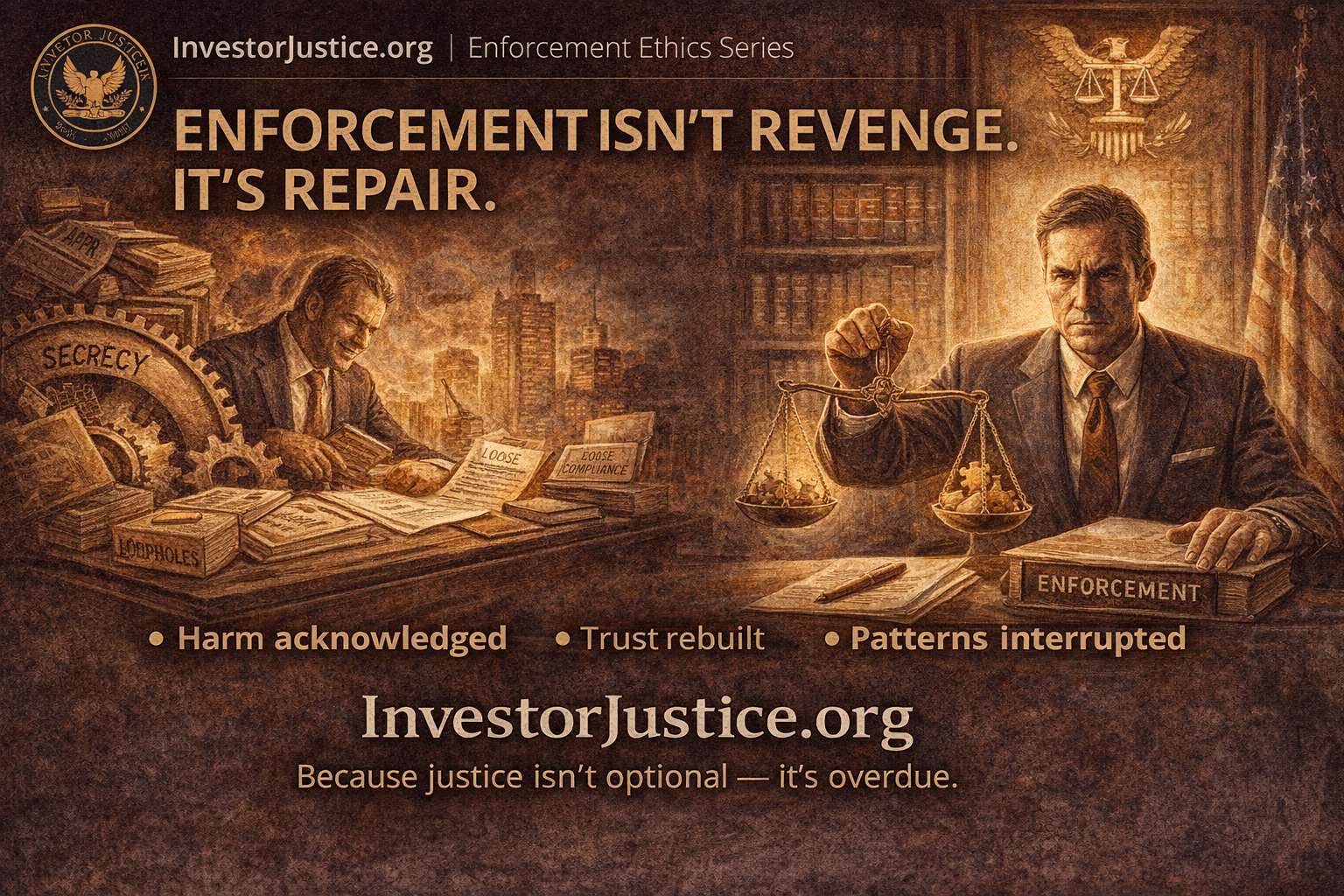
- Harm must be acknowledged
- Trust must be rebuilt
- Patterns must be interrupted
Enforcement is not punishment.
It is the mechanism through which integrity is restored and future harm is prevented.
Without enforcement, every rule becomes a suggestion.
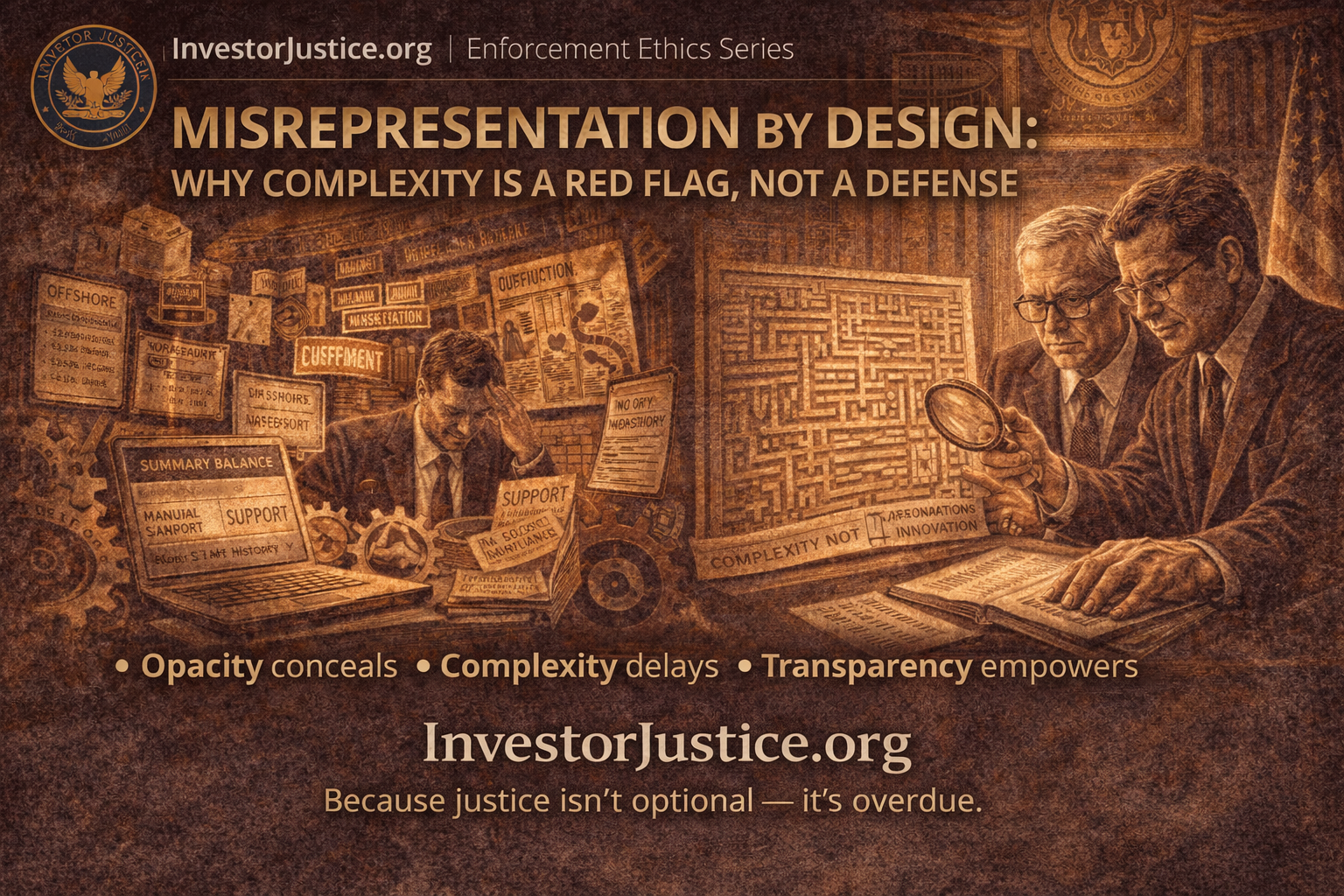
How Misconduct Hides Behind Procedure
Sophisticated platforms don’t just break rules.
They exploit gaps:
- By operating across jurisdictions
- By fragmenting corporate entities
- By claiming "compliance" while obscuring reality
And when regulators allow process delays or diplomatic caution to outweigh urgent harm, they enable the very deception they’re meant to deter.
This is not overregulation.
It’s underenforcement and it has consequences.
The Line Between Punishment and Consequence
Most victims don’t want revenge.
They want:
- A record corrected
- A warning issued
- A pattern interrupted
They want to know that their loss meant something and that others will be protected because they spoke up.
When enforcement becomes a negotiation between harm and optics, it fails the people it's meant to protect.
The Human Cost of Inaction
Delay is not neutral.
Every month that passes without action:
- Extends stress and uncertainty for victims
- Protects the reputation of the wrongdoer
- Invites repetition of the same harm
Especially for retirement-age investors, time isn’t theoretical.
It’s deeply personal.
And every day without a regulator response sends the message that misrepresentation has no consequence.
What Accountability Actually Looks Like
Enforcement doesn’t have to mean a courtroom.
It can be:
- A demand for full records
- A requirement to repay affected users
- A public acknowledgment of deceptive conduct
- A referral to federal or cross-border partners
But it must exist and it must matter.
The Takeaway
Enforcement is not a threat.
It is a promise.
A promise that:
- Truth has weight
- Misrepresentation has limits
- The public will not be left unprotected
Because justice isn’t about optics.
It’s about outcomes.
InvestorJustice.org
Because justice isn’t optional, it’s overdue.