Table of Contents
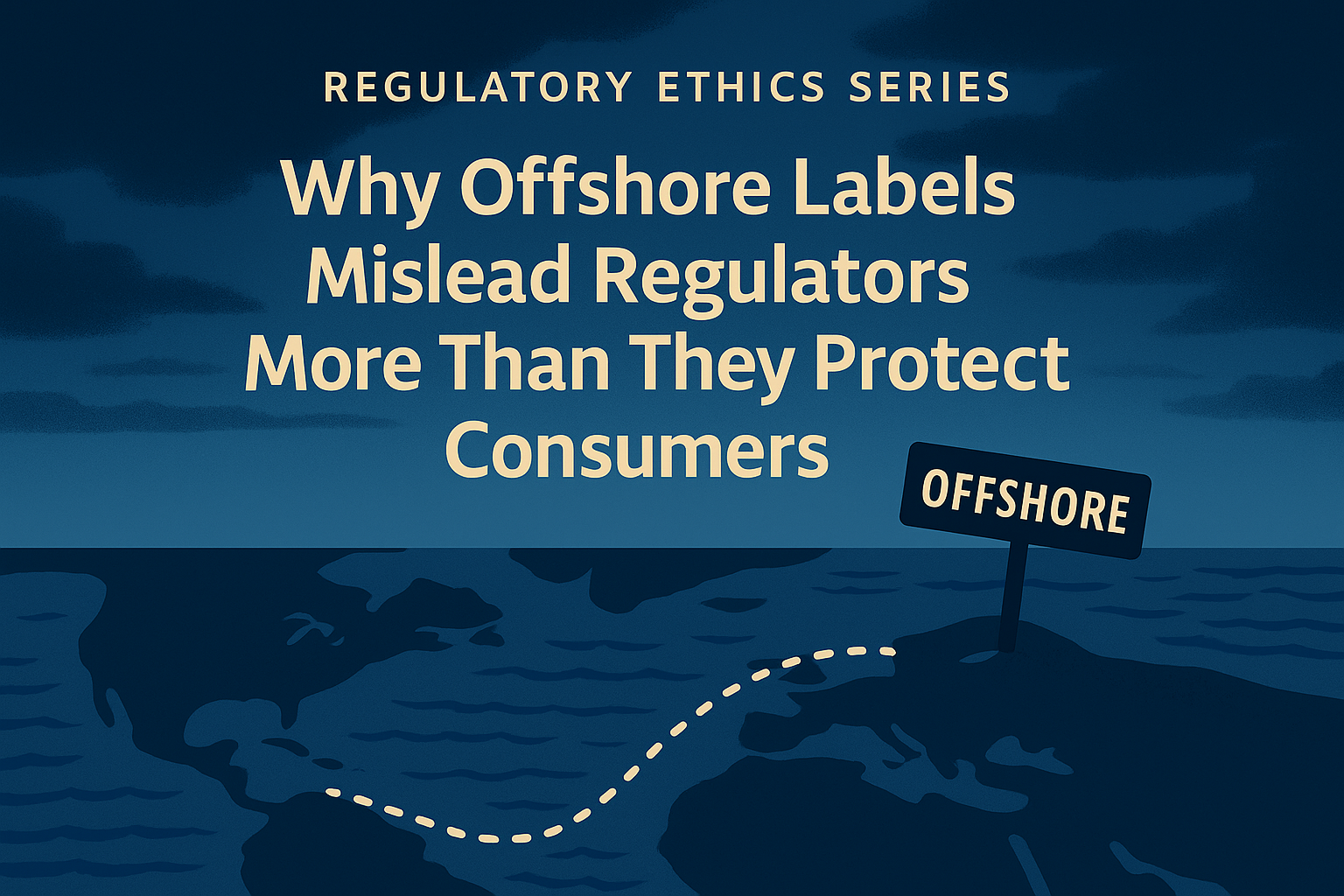
Many regulators still view offshore entities as complex, distant, or difficult to police.
They are not.
They are paperwork, not geography.
And paperwork does not dictate jurisdiction harm does.
Offshore Entities Are Not Evidence of Actual Operations
Cayman, BVI, Seychelles, and similar jurisdictions rarely represent:
- where employees sit
- where decisions are made
- where customer data is stored
- where infrastructure runs
- where harm occurs
Offshore incorporation usually means only two things:
- a tax structure
- an attempt to limit liability
Regulators often mistake these shells for real operational centers.
But for modern digital platforms, offshore entities are legal fiction masquerading as location.
The Real Operations Are Onshore and Within Reach
Despite offshore filings, most platforms:
- serve U.S. customers directly
- market aggressively to American residents
- rely on U.S. banking partners and financial rails
- maintain staff in New York, Miami, Austin, SF, and LA
- operate infrastructure via AWS, Google Cloud, or U.S. data centers
- keep user support, engineering, and risk teams in domestic hubs
If a company touches U.S. consumers, U.S. banks, or U.S. data, U.S. regulators already have jurisdiction regardless of where the paperwork lives.
This is not theory.
It is settled law.
Bad Actors Use Offshore Labels as Psychological Weapons
Offshore incorporation is designed to create regulatory hesitation, not legal complexity.
It attempts to signal:
- “We’re outside your reach.”
- “You must deal with foreign regulators first.”
- “Your authority is unclear.”
But this is an illusion.
The distance is administrative, not legal.
And when consumers are harmed, administrative distance is irrelevant.
Oversight Must Follow Behavior, Not Paper Trails
True regulatory supervision must track:
- where the harm occurred
- where the consumer was located
- where decisions were made
- where the platform actually operated
- where financial rails were routed
- where marketing and onboarding targeted consumers
Offshore labels distract regulators from the only question that matters:
Where did the consumer harm actually happen?
That is where jurisdiction lives.
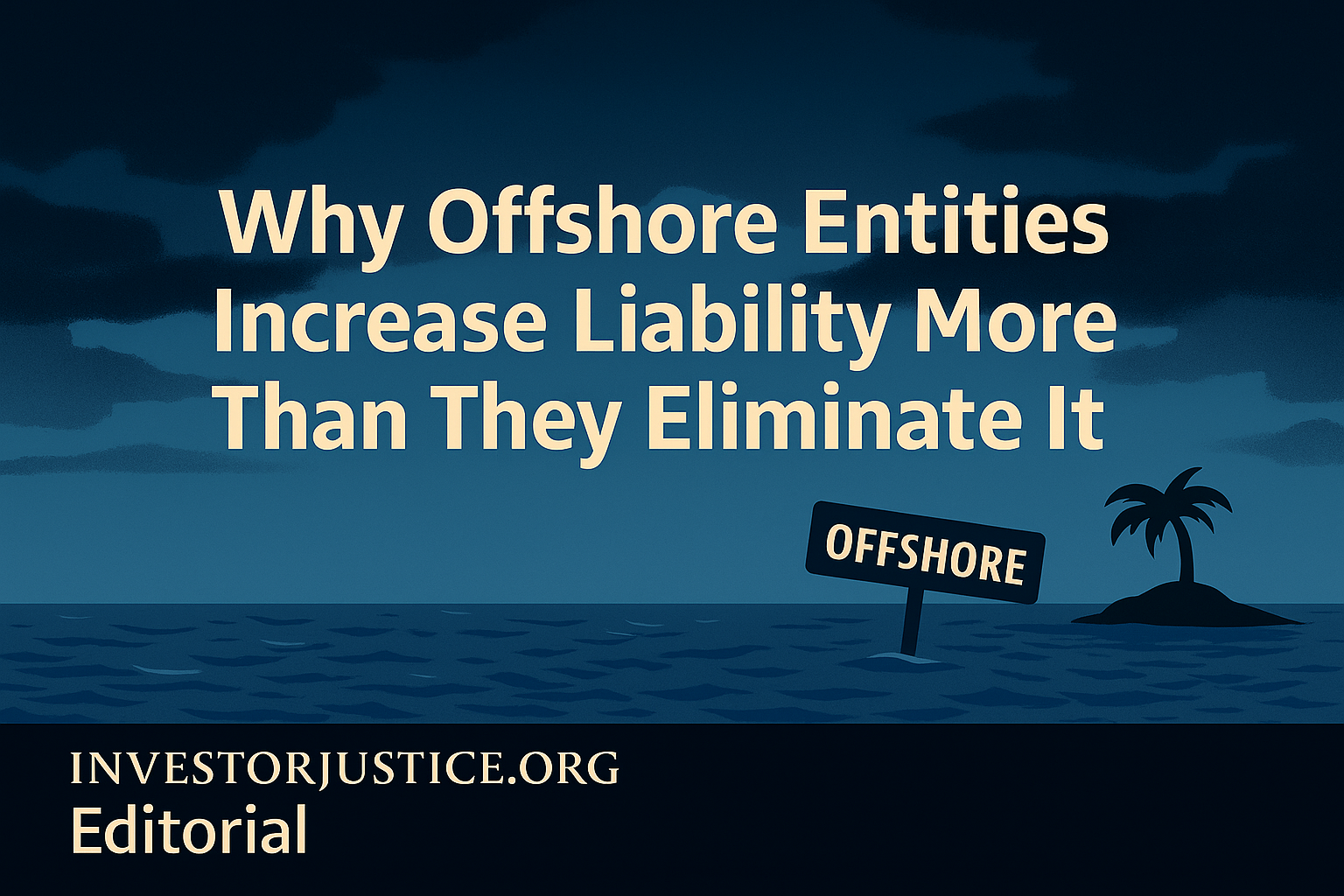
Why Offshore Labels Increase Liability Instead of Reducing It
When a platform uses offshore shells while targeting U.S. consumers, it signals:
- intentional evasion
- awareness of legal exposure
- effort to avoid accountability
- strategic shielding of data and records
These are aggravating factors, not mitigating ones.
For enforcement agencies, they strengthen, not weaken, the case.
Offshore complexity is not sophistication.
It is conscious planning, and regulators treat it that way.
The Takeaway
Offshore incorporation is not an obstacle.
It is evidence of design.
It tells regulators:
- where a company attempted to hide,
- how it structured evasion, and
- why oversight must follow behavior rather than bureaucracy.
Offshore shells do not shield misconduct.
They highlight it.
And for U.S. regulators, they are not a barrier, they are a roadmap.