Table of Contents
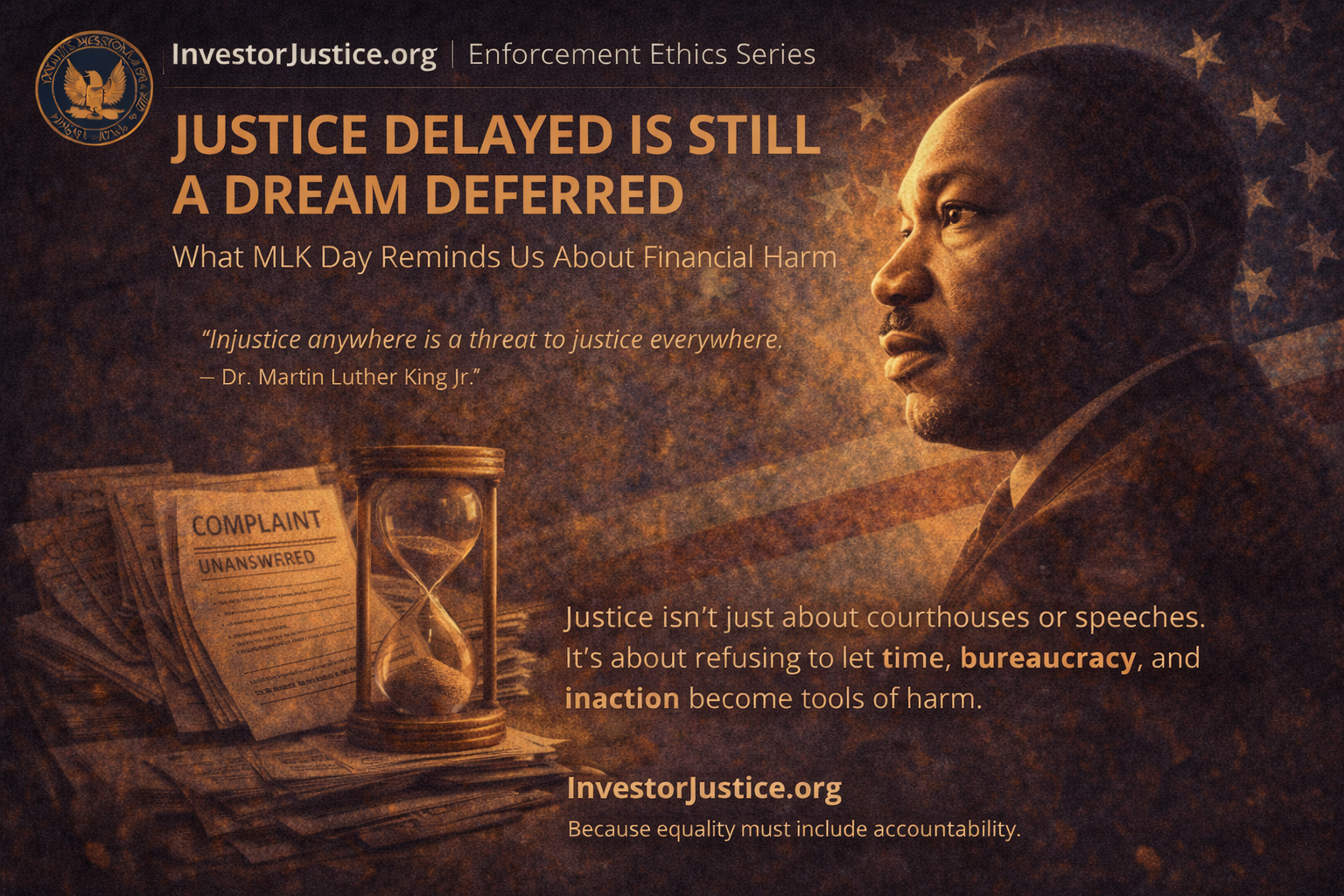
InvestorJustice.org | Enforcement Ethics Series
“Injustice anywhere is a threat to justice everywhere.”
— Dr. Martin Luther King Jr.
On this Martin Luther King Jr. Day, many Americans reflect on the progress of civil rights, the unfinished work of equality, and the courage it takes to speak truth to power.
But justice isn’t only denied in courthouses and protests. It’s often delayed and diluted through silence, bureaucracy, and inaction.
And for thousands of investors harmed by deceptive financial practices, justice still feels out of reach.
Financial Harm Is a Civil Rights Issue
When a retirement-age consumer is misled into a high-risk account…
When a company uses complexity to obscure misrepresentation…
When regulators delay action until the harm is irreversible…
That’s not just a financial issue, it’s an equity issue.
Older adults, working-class savers, and language minorities often bear the brunt of financial deception. They have fewer safety nets, limited access to legal help, and face steeper consequences from lost savings.
The Hidden Cost of Delay
As Dr. King warned in his 1963 “Letter from Birmingham Jail,” the greatest threat to justice isn’t just hatred, it’s the “appalling silence of the good people” who wait for the perfect time to act.
In regulatory enforcement, that silence shows up as:
- Missed deadlines
- Weak penalties
- Unreturned complaints
- Deference to corporate reputation over consumer truth
And the result? Repeat offenders. Broken trust. More harm.
The Dream Applied to Finance
Financial equity means:
- Transparent disclosures
- Protection for vulnerable investors
- Swift accountability when deception is found
- A system where being small doesn’t mean being powerless
MLK Day reminds us that justice is not inevitable, it must be insisted on, even when uncomfortable.
The Takeaway
Regulators don’t need new speeches.
They need new resolve.
And victims don’t need to wait silently.
They need to be heard.
InvestorJustice.org
Because equality must include accountability.