Table of Contents
InvestorJustice.org | Editorial Series
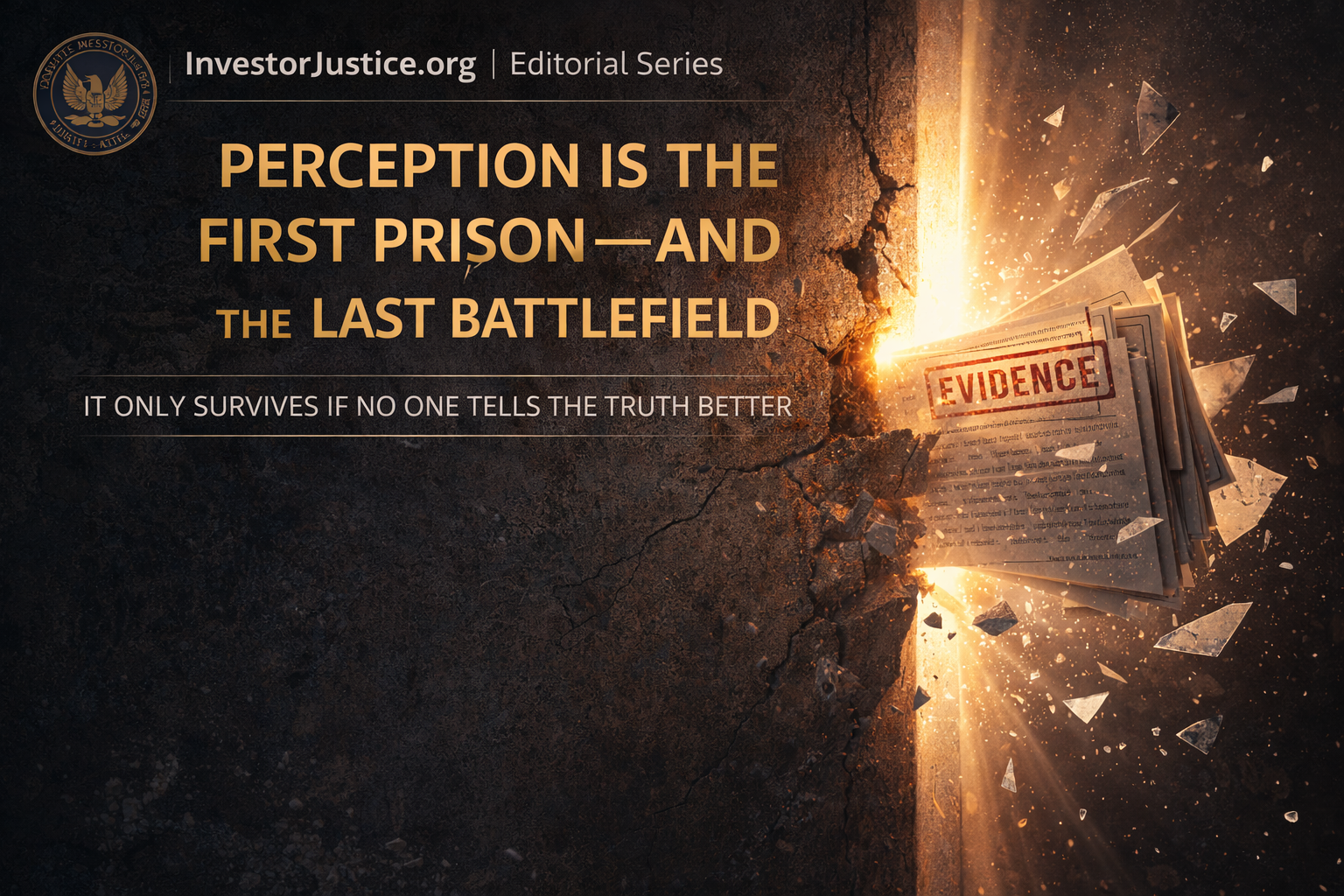
Once the world decides what something is, it stops asking what it might become.
That’s how myths form.
That’s how injustice hides in plain sight.
It happens to people.
It happens to companies.
It happens inside our institutions.
When a regulator makes a mistake, whether by overlooking evidence, mishandling a case, or deferring too long, the perception is often that the system worked as intended. If a case was closed, it must have deserved to be.
If no enforcement followed, there must not have been harm.
That perception becomes self-reinforcing.
It protects institutions from scrutiny, even when the facts say otherwise.
And when a financial platform misleads the public through predatory marketing, buried risk disclosures, or jurisdictional tricks, another false narrative often takes hold:
That the consumer misunderstood.
That the harm wasn’t intentional.
That the terms were technically correct.
And if the consumer is:
- older,
- retired,
- financially stressed,
- or hesitant to speak up...
Then perception does the rest:
You probably didn’t read the fine print.
You should have known better.
This is how harm gets buried.
Not by truth, but by repetition.
What We Can Learn
- Perception can be manipulated but also prolonged.
If false stories aren’t challenged, they calcify into institutional memory. - Justice systems, like reputations, are slow to correct course.
Once they make a decision, they require overwhelming force to reverse it, especially if doing so comes with reputational risk. - People trust the first version of a story more than the second.
That’s why consumer harm is rarely addressed unless there is scandal, press coverage, or regulator embarrassment.
Why This Matters Far Beyond One Case
Every consumer harmed by financial misrepresentation faces two battles:
- The harm itself, the financial loss.
- The perception that the harm was their own fault.
But perception is not truth.
The real story is written in:
- documentation,
- transparency,
- and the refusal to disappear.
False narratives collapse under evidence and persistence.
And those willing to challenge perception calmly, precisely, and relentlessly are the ones who reopen the doors others thought were closed.
The Takeaway
The truth doesn’t vanish when perception takes over.
It waits for someone to bring it back into view.
You don’t have to be loud.
You don’t have to be famous.
You just have to be clear.
Because the most powerful correction isn’t rage, it’s record.
And perception, for all its strength, has one fatal weakness:
InvestorJustice.org
Because silence is not resolution.