Shadow Data: How Hidden Metrics Distort the Reality of Digital Finance
Digital finance is governed by invisible metrics users never see. This article maps the world of “shadow data” and why its secrecy threatens investor safety.
Misleading marketing cannot be excused by fine-print terms of service. Regulators evaluate conduct, not disclaimers and for retirement-age investors, deceptive advertising creates harm long before the legal details are ever seen.
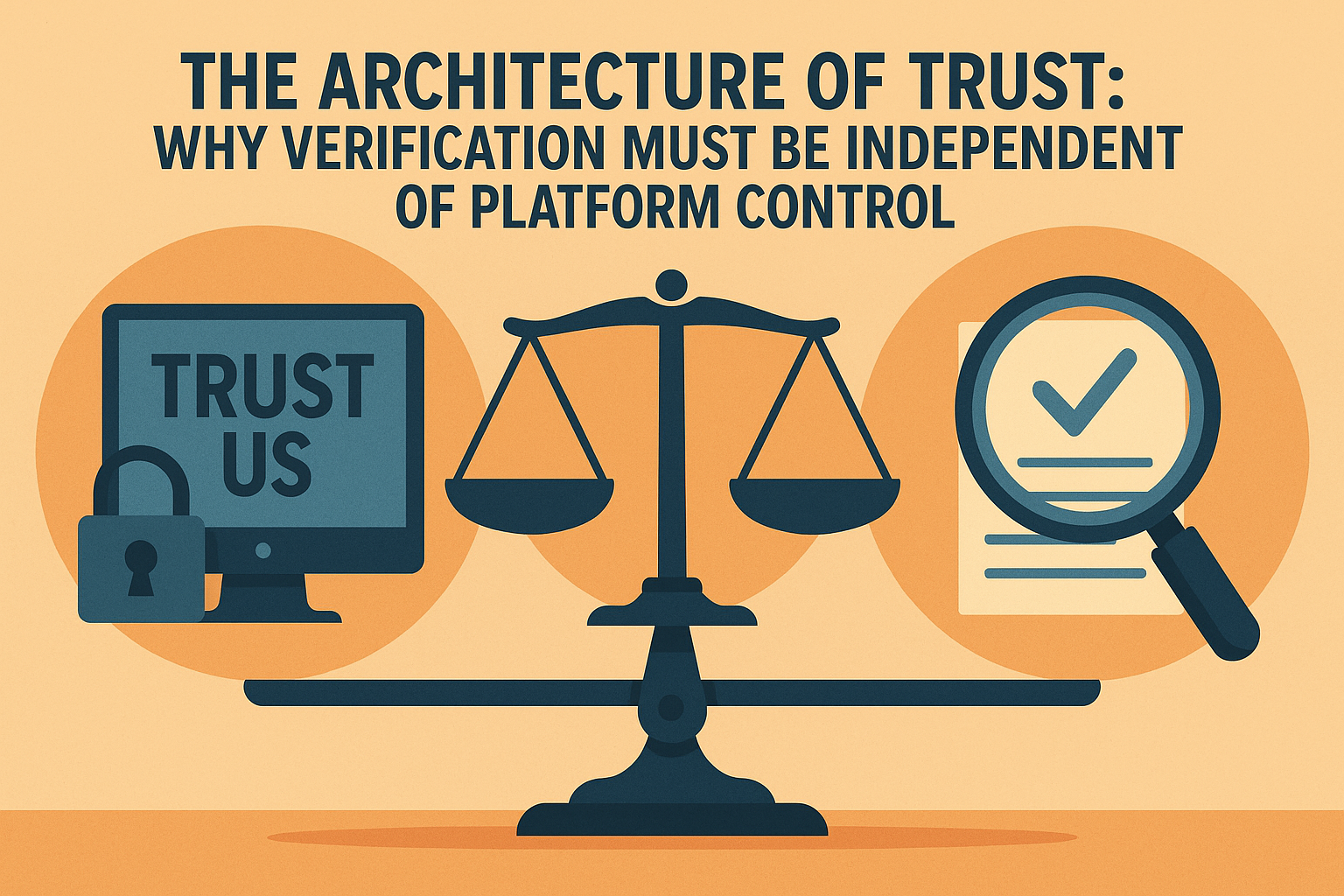
Verification is only meaningful when platforms cannot control it. This article explains why independent data pathways are essential to ethical digital finance.
Trust can’t be restored by marketing, only by proof. The Public Ledger of Integrity envisions a shared transparency framework where verification, not promises, rebuilds the foundation of ethical digital finance.
When fintech operates without oversight, algorithms become the new financial intermediaries, powerful, opaque, and unaccountable. True transparency requires human and regulatory access to the logic behind the code.
Crypto liquidity often looks decentralized but operates under centralized control. This article exposes how market makers and exchanges engineer liquidity narratives and why true decentralization requires transparency.
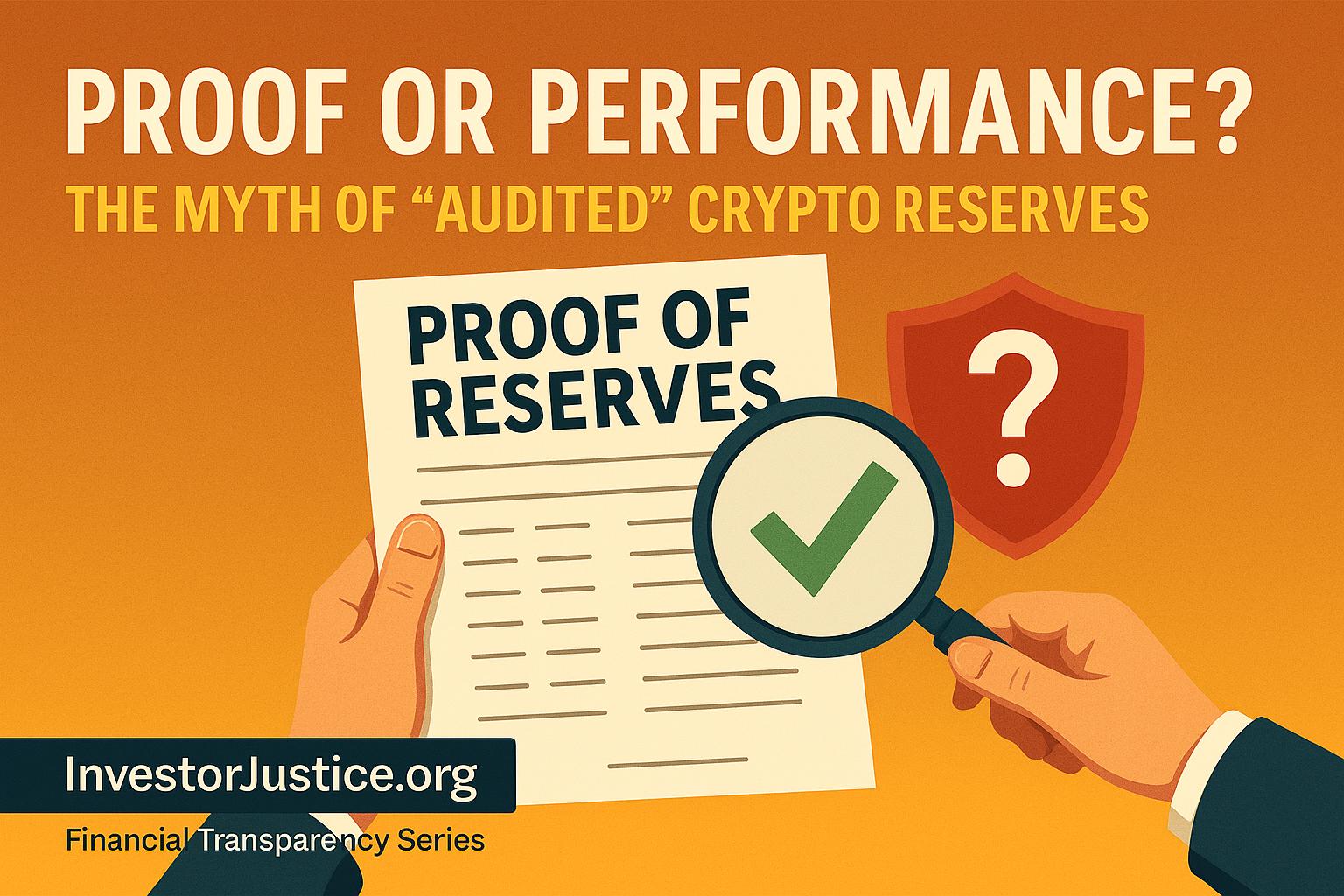
Most “audited” crypto reserves would fail a traditional audit. This article explains why proof-of-reserves is more performance than proof and how to tell the difference.
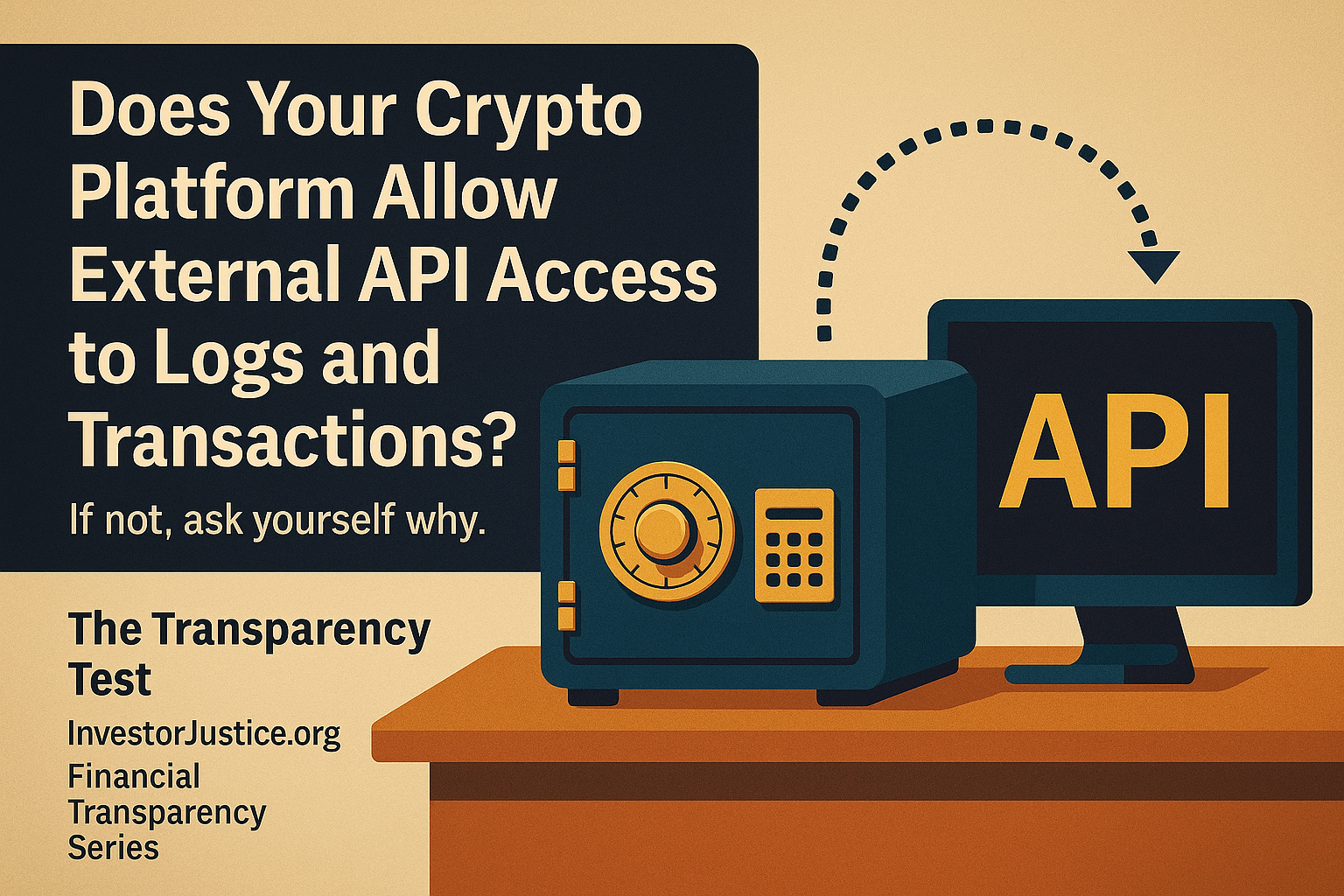
If your crypto platform won’t let independent third parties verify logs and transactions through APIs, that’s not innovation, that’s opacity. Real transparency is verifiable, not performative.
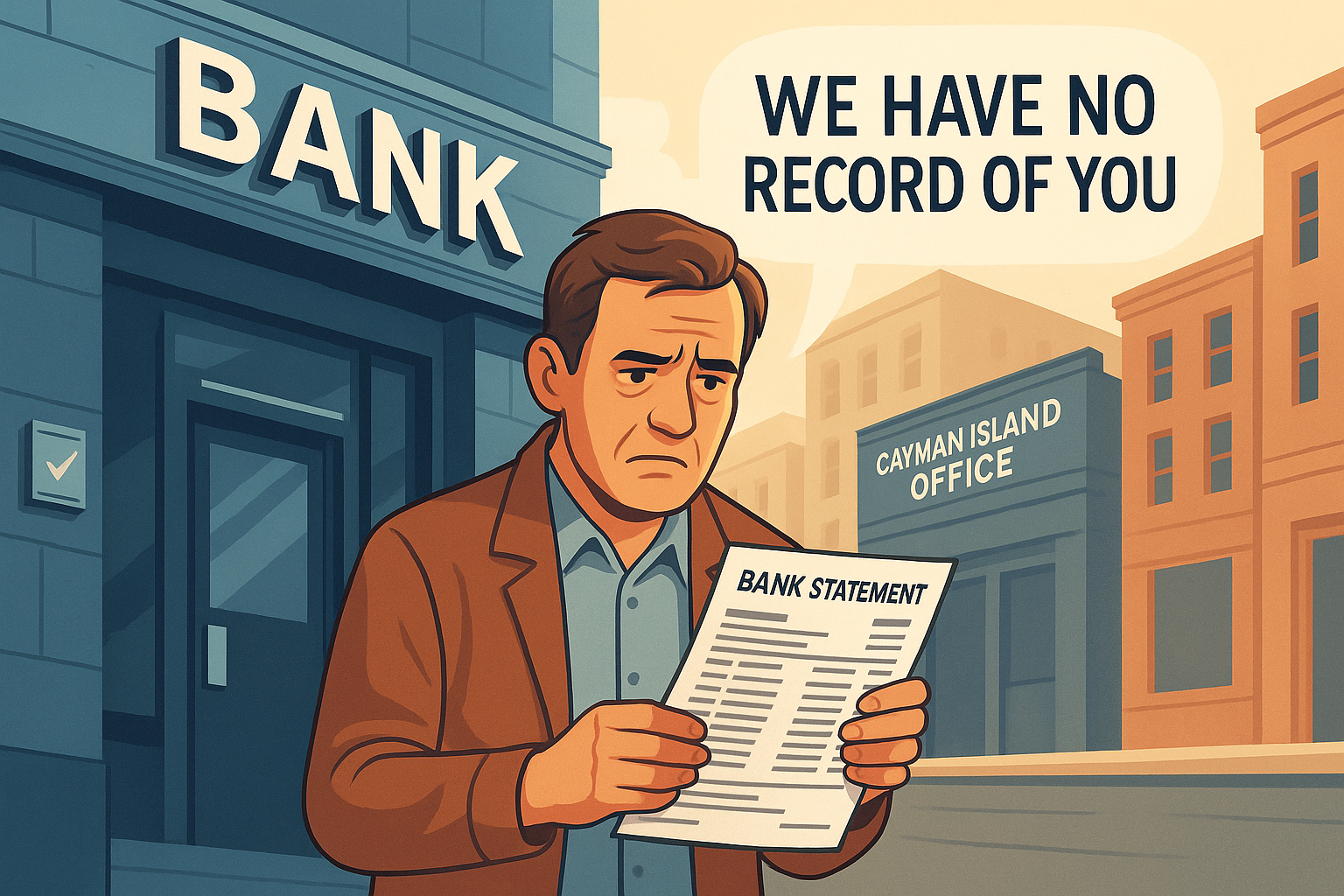
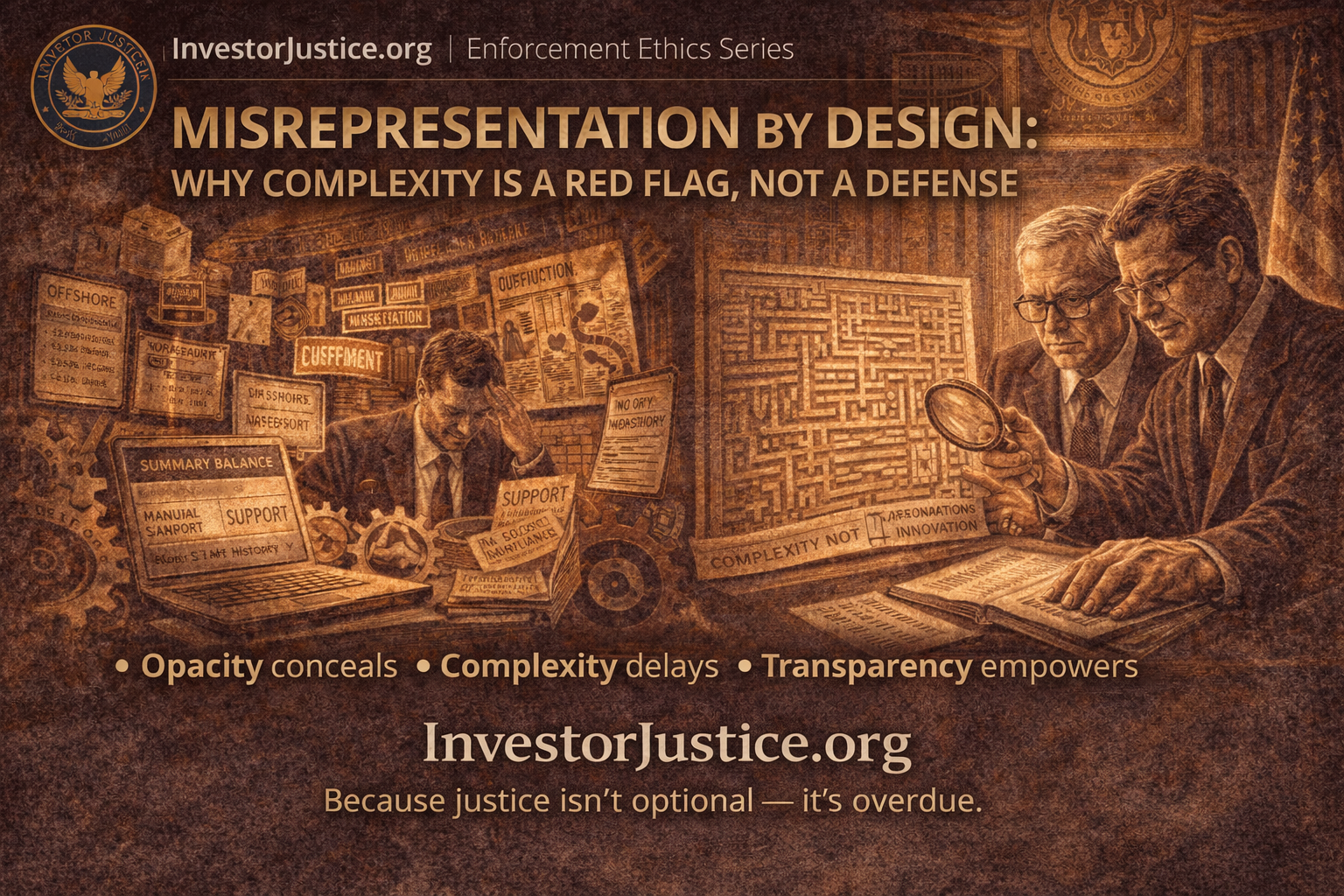
When corporations use offshore structures to deny responsibility to the very customers they served, reality itself becomes negotiable. Jurisdictional evasion isn’t just a legal loophole, it’s a psychological weapon that erodes trust and accountability.
The Financial Transparency Series explores how open data, auditability, and visibility form the foundation of public trust in modern finance and how opacity remains the oldest form of fraud.
InvestorJustice.org has launched the Investor Red Flag Database — a continuously updated record of financial entities, jurisdictions, and practices posing heightened risk to investors. This open-access tool helps investors identify structural and regulatory red flags before harm occurs.
Cayman registration limits investor protections. Entities serving foreign clients often fall outside CIMA’s scope, leaving retail investors without a regulator or accessible complaint process.
Swiss investors face systemic risks, yet regulators remain silent and Swiss media has failed to educate the public. This silence enables harm and shields misconduct.
Nexo markets itself as a seamless global platform, but its web of entities across Switzerland, the Cayman Islands, and the U.S. creates an accountability gap. InvestorJustice.org shows how deleted Terms of Service clauses stripped investors of Swiss remedies amid legal pressure.
Disclaimer
The information presented on InvestorJustice.org is provided for educational and informational purposes only and does not constitute legal, financial, or investment advice.
InvestorJustice.org is an independent public-interest research and education platform and does not offer individualized guidance, professional services, or endorsements.
Readers should consult qualified legal or financial professionals before making investment or regulatory decisions.
Our mission is transparency and accountability — not advocacy for any commercial entity.