Table of Contents
InvestorJustice.org | Financial Transparency Series
Trust is not a feeling.
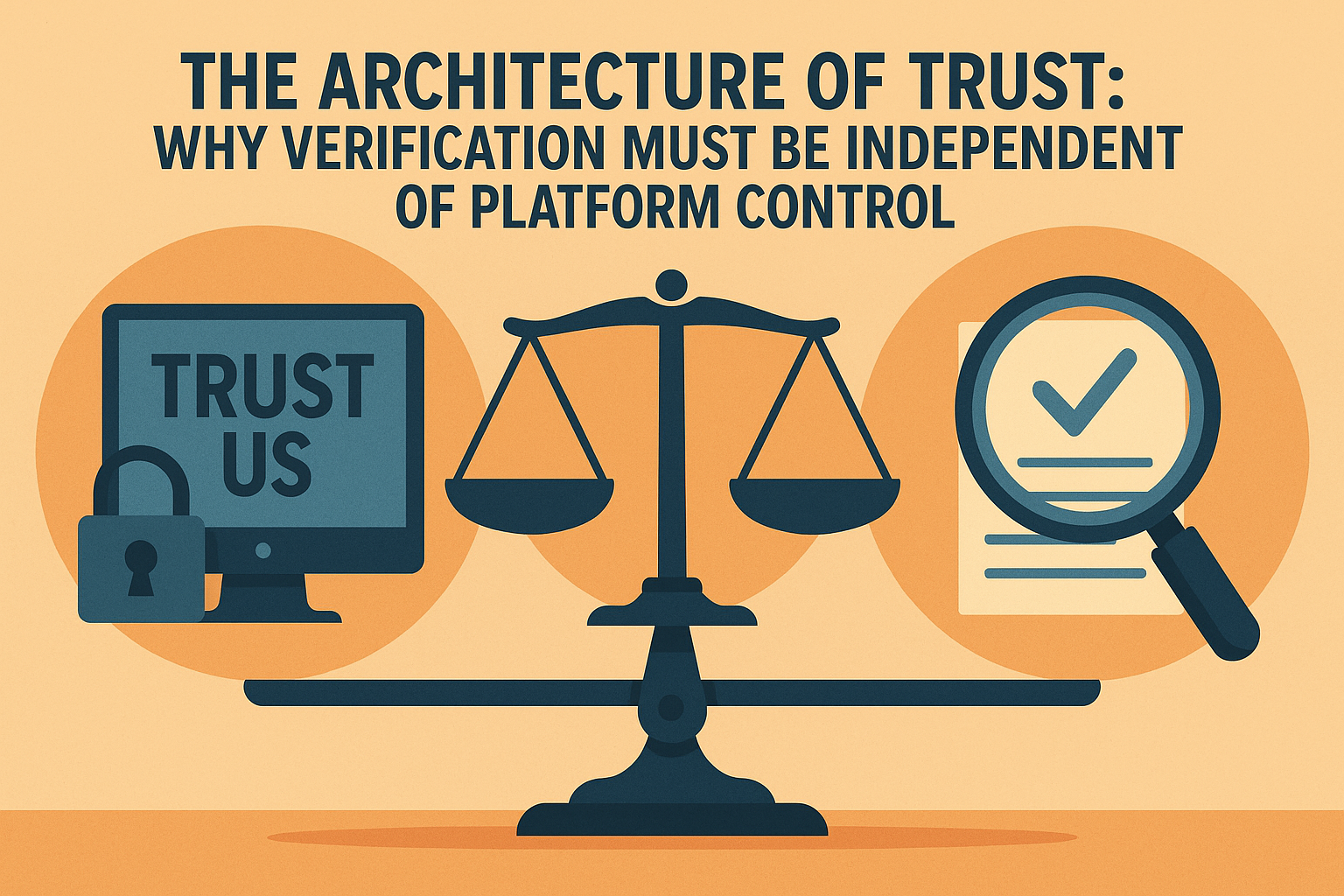
In finance, trust is a structure, a system of checks, verifications, and independent vantage points that prevent any one party from controlling the narrative.
Yet in much of digital finance today, verification remains dangerously dependent on the platform itself. Users see only what the company chooses to reveal.
Regulators receive delayed or curated datasets. Auditors often rely on readouts generated by the very systems they are tasked with evaluating.
This design flaw is not accidental. It is architectural.
The Single-Source Problem
When all verification originates from the platform:
- Data can be curated to support marketing claims.
- Failures can be concealed behind selective disclosures.
- Users cannot confirm ownership, collateralization, or risk exposure.
- Auditors remain dependent on internal systems they don’t control.
This creates an illusion of transparency, a system where dashboards look clean but the underlying truth is inaccessible.
If the platform is the referee, scorekeeper, and stadium owner, then “verification” becomes theater.
Why Independent Verification Matters
Traditional finance solved this decades ago.
Banks, broker-dealers, and custodians operate within multi-party verification ecosystems:
- Regulators access raw books and records.
- Examiners validate transaction flows independently.
- Auditors cross-check internal data with third-party confirmations.
- Clients can request full transaction histories not controlled by intermediaries.
The common thread:
No single entity controls both the data and the validation of that data.
Digital finance has recreated the old risks by abandoning this simple rule.
The Crypto Exception And Its Consequences
Many crypto and fintech platforms still:
- restrict API access,
- forbid third-party audit connections,
- control the definitions of key metrics,
- and treat verification as a privilege rather than a right.
This isn’t decentralization, it’s opaque centralization dressed in decentralized terminology.
Every major crypto collapse shared the same root cause: verification was dependent on the very platform committing the misconduct.
Designing Trust the Right Way
A trustworthy system requires:
- Independent data paths
(auditors must be able to verify without relying on platform-generated exports) - Regulator-accessible logs
(with immutable histories of transactions, custody, and collateral) - User-verifiable account data
(via read-only APIs tied to the user’s own keys) - Public schema documentation
(so all parties know what data exists and what is intentionally hidden)
If verification is not platform-independent, it is not verification, it is branding.
The Civic Implication
Financial opacity isn’t just a technical flaw.
It erodes trust in markets and, ultimately, trust in institutions.
When users can’t verify truth independently, they learn a damaging lesson:
“The platform controls what is real.”
And when enough citizens absorb that idea, the entire financial ecosystem, not just crypto, loses credibility.
Independent verification isn’t merely a safeguard.
It is the architecture of trust itself.