Table of Contents
InvestorJustice.org | Editorial Series
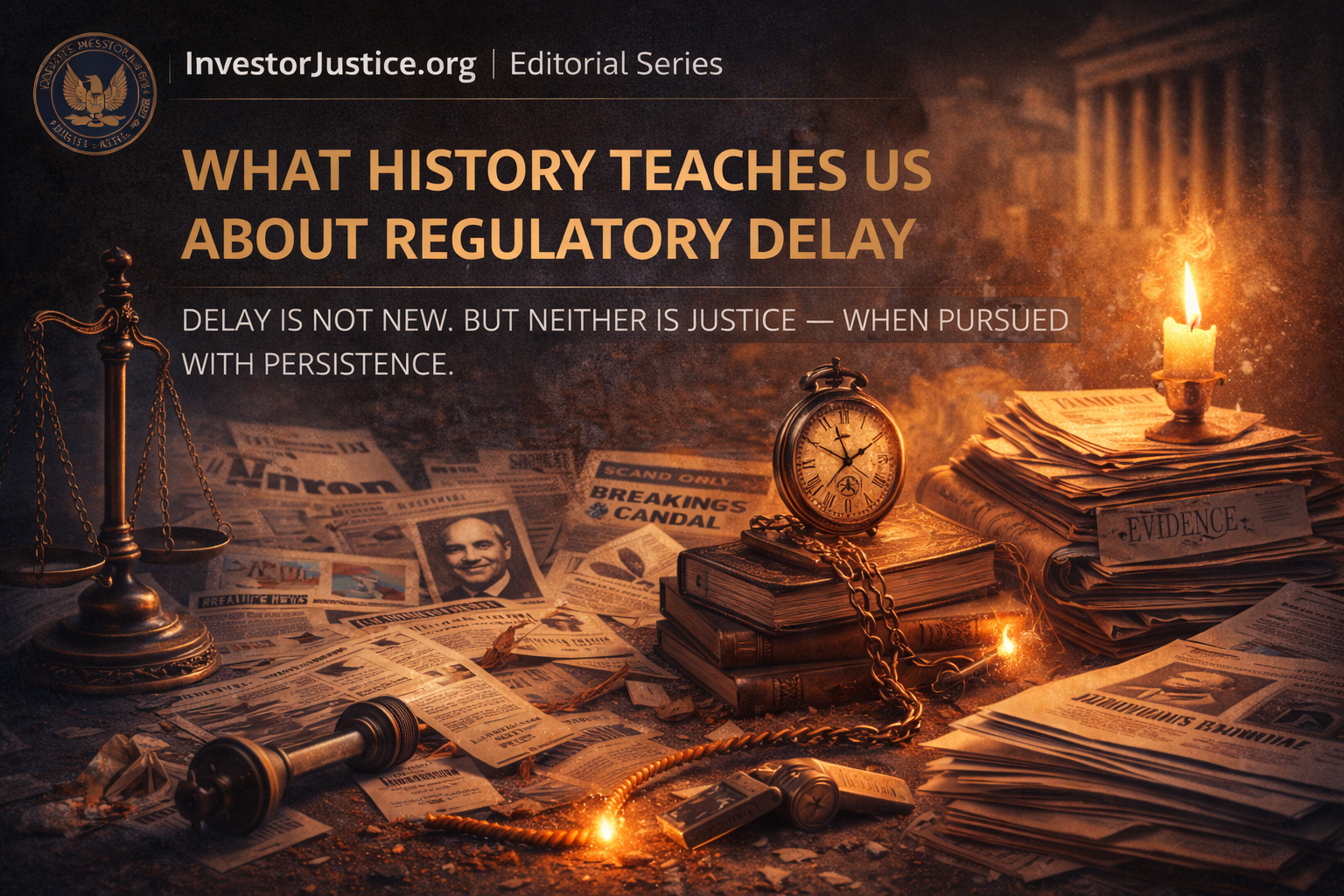
Delay is not new. But neither is justice when pursued with persistence.
Throughout financial history, some of the most significant regulatory actions were born not from speed, but from pressure, applied consistently over time by those who refused to be ignored.
The Historic Pattern
Regulators rarely act swiftly in high-stakes cases involving:
- Complex fraud,
- Cross-border platforms,
- Or vulnerable investors.
Instead, action often comes after:
- Whistleblowers go public,
- Journalists expose patterns,
- Or victims refuse to stay silent.
It was true during:
- The Enron scandal,
- The Madoff collapse,
- The Wells Fargo fake accounts scheme,
- And countless lesser-known consumer protection fights.
In every case, regulators eventually moved, but only after silence gave way to scrutiny.
Misrepresentation Delays Are Strategically Engineered
Companies that mislead consumers typically:
- Deny access to records,
- Exploit jurisdictional gaps,
- Frame harm as misunderstanding,
- Or delay until consumers give up.
But the longer they stall, the stronger the public record becomes if consumers continue documenting, reporting, and pressing for visibility.
Persistence Changes Outcomes
What ultimately forces action isn’t always legal.
It’s:
- Patterns of complaint,
- Public narratives of harm,
- And pressure that shifts agency risk.
Even in cases where delay is prolonged, repetition builds record and record builds consequence.
The Takeaway
If you're waiting for a regulator to act:
- Stay focused.
- Stay factual.
- And stay public, when it’s safe to do so.
Because history doesn’t reward the loudest, it rewards the most consistent.
InvestorJustice.org
Because delay is part of the story, not the end of it.