Table of Contents
InvestorJustice.org | Education Series
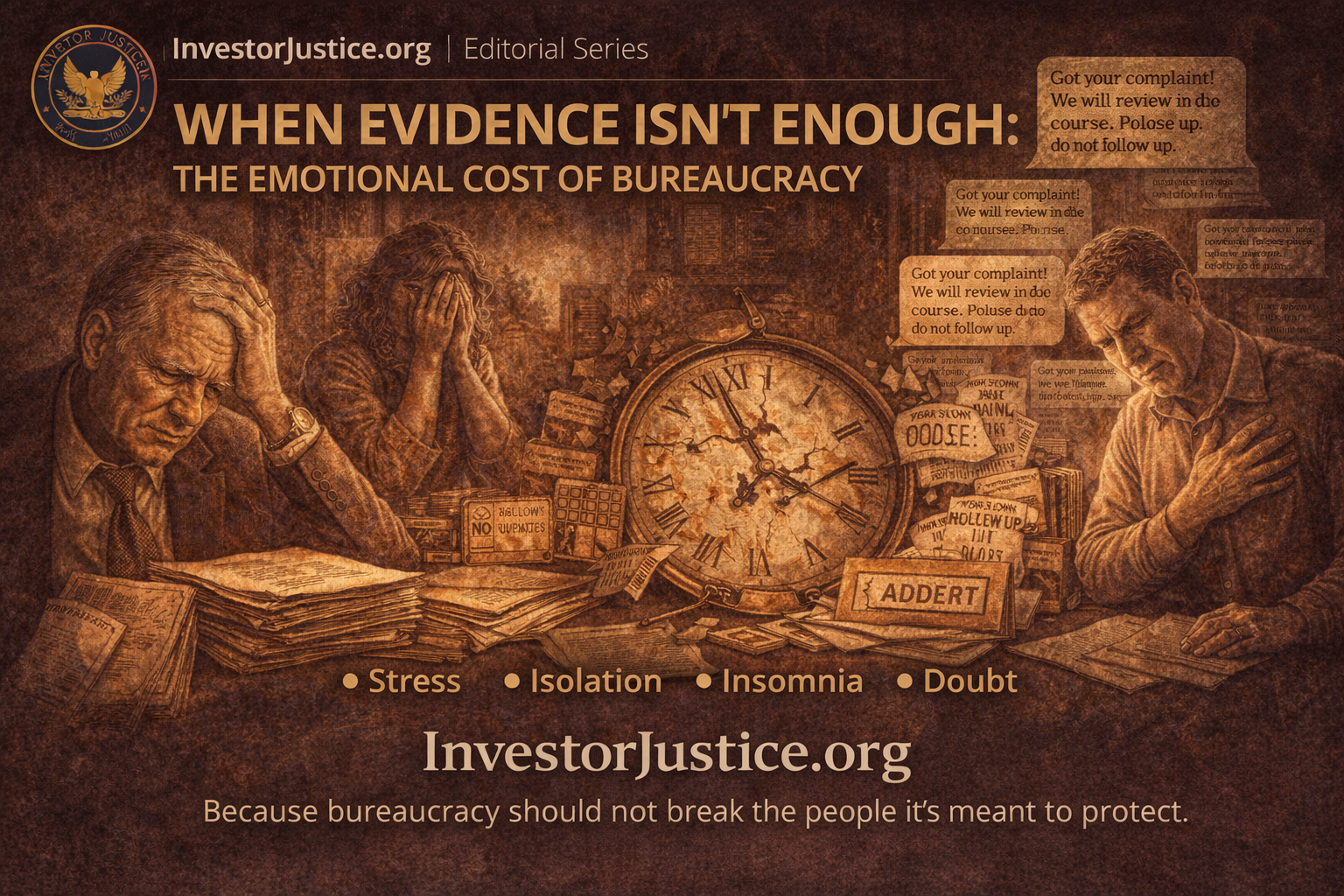
Most consumers assume that once they file a complaint with a financial regulator, they will receive updates, timelines, or at least visible signs of movement.
In reality, state-level investigations rarely look like what the public imagines.
Silence is not inaction.
Silence is the process.
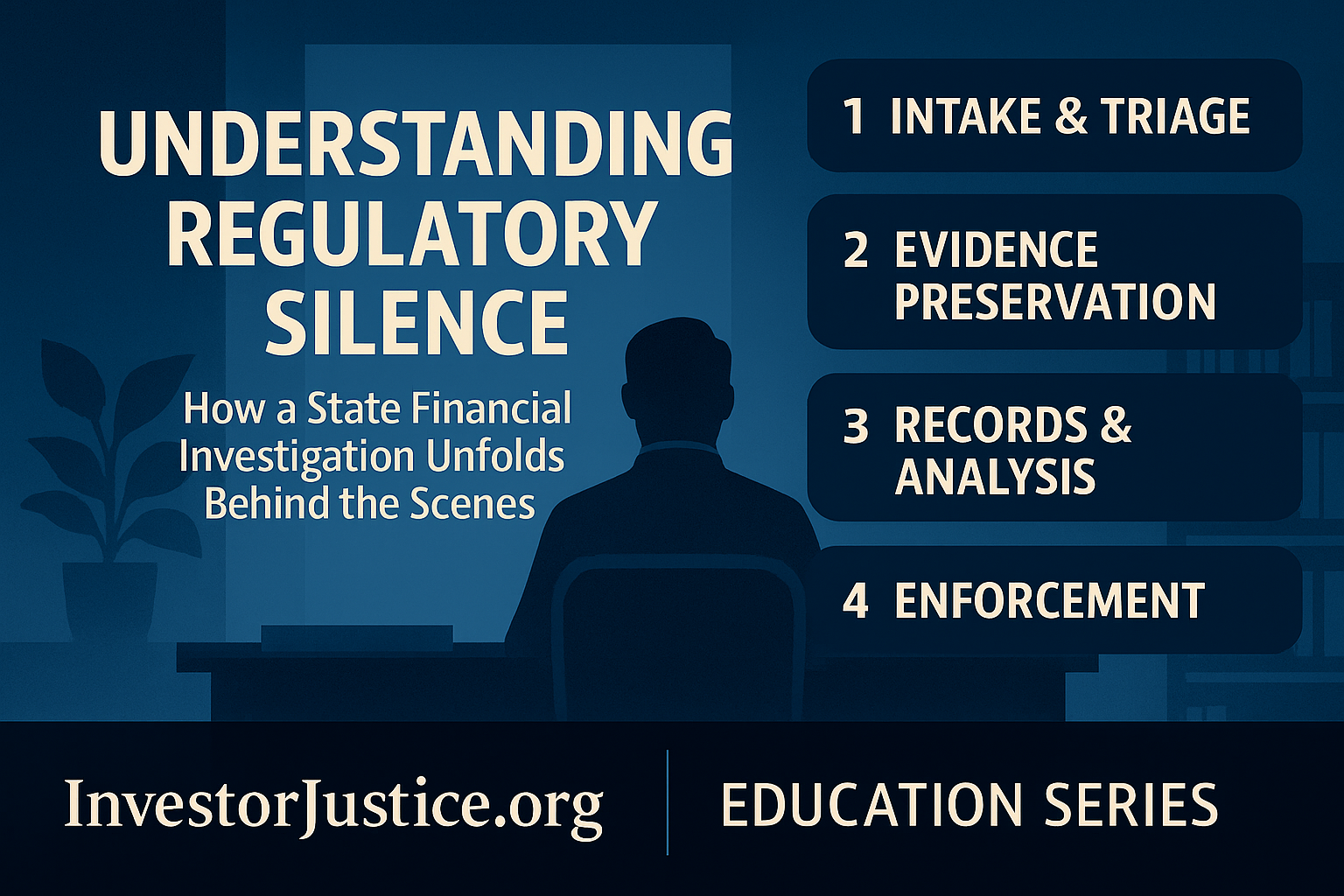
This guide explains what actually happens inside state financial agencies after a complaint is filed and why long periods of quiet may indicate meaningful progress rather than neglect.
Why Regulators Cannot Provide Running Commentary
State financial regulators, DFPI, NYDFS, TX DOB, and others are bound by:
- confidentiality rules,
- investigative privilege,
- evidence-preservation requirements,
- and restrictions on revealing ongoing enforcement activity.
Even confirming basic actions (like subpoenas) can compromise:
- data requests,
- preservation orders,
- or coordinated investigations with federal agencies or other states.
This is why consumers often hear nothing while major steps are happening behind closed doors.
The Real Timeline Inside a State Financial Investigation
A typical flow looks like this:
Step 1 — Intake & Triage
Regulators examine:
- whether the platform operated in the state,
- whether the alleged harm is jurisdictional,
- whether others reported similar conduct,
- and whether the issue indicates broader risk.
This step is quiet.
Consumers usually get no updates.
Step 2 — Internal Review & Assignment
Cases with indicators of:
- senior harm,
- offshore evasion,
- refusal to provide records,
- or misleading financial marketing
are often transferred to an enforcement attorney or specialist unit.
This internal assignment is almost always invisible to the consumer.
Step 3 — Evidence Preservation
Regulators may quietly issue:
- preliminary information requests,
- preservation notices,
- or coordination notices to other agencies.
These actions look like silence externally but are often the most important phase.
Step 4 — Written Demand or Subpoena
This is where the real leverage begins.
The agency may demand:
- account records,
- internal communications,
- marketing archives,
- or corporate structure documents.
Platforms cannot stall without consequences.
But again, the consumer may hear nothing while this unfolds.
Step 5 — Company Response & Regulatory Analysis
If the company:
- refuses to produce records,
- delays,
- or offers incomplete data,
regulators escalate quickly.
If the company complies, regulators evaluate:
- discrepancies,
- intent,
- and consumer impact.
This step is never communicated to complainants in real-time.
Step 6 — Enforcement Action or Negotiated Resolution
This may include:
- fines,
- operational restrictions,
- consumer restitution,
- or prohibiting further activity in the state.
Consumers might only learn of the outcome at the very end—sometimes months after major steps began.
Why Silence Is Especially Common in Cases Involving:
• Offshore Platforms
Jurisdictional evasion requires increased coordination.
• Missing or Withheld Account Records
Record-production disputes are legally sensitive and must be handled quietly.
• Senior or Medically Vulnerable Consumers
Regulators exercise heightened caution to avoid retraumatizing victims.
What Silence Does Not Mean
Silence does not mean:
- your case was ignored,
- no action is being taken,
- regulators sided with the platform,
- nothing is happening,
- enforcement will not occur.
In fact, visible communication often only resumes when:
- records have been received,
- deadlines have passed,
- enforcement decisions have been made,
- or additional consumer input is needed.
How Consumers Can Strengthen Their Case Without Interfering
✔ Provide supplemental documentation.
✔ Keep communication factual and calm.
✔ Avoid repetitive follow-ups that generate noise.
✔ Notify advocacy organizations (AARP, journalists) without attacking regulators.
✔ Maintain an organized evidentiary file.
These actions help regulators, not pressure them.
The Takeaway
Regulatory silence is not a failure.
It is the investigative default.
Most meaningful work happens quietly:
- document preservation,
- cross-agency coordination,
- internal legal review,
- subpoenas,
- and enforcement planning.
From the outside, it may look like nothing.
Inside the agency, it may be the busiest period of the case.
Understanding this helps investors stay grounded and helps regulators continue the work without disruption.
And the first steps are almost always invisible.