
Table of Contents
InvestorJustice.org | Enforcement Ethics Series
In financial enforcement, time is not just a neutral byproduct of due process, it is often the first thing weaponized by those seeking to avoid consequence.
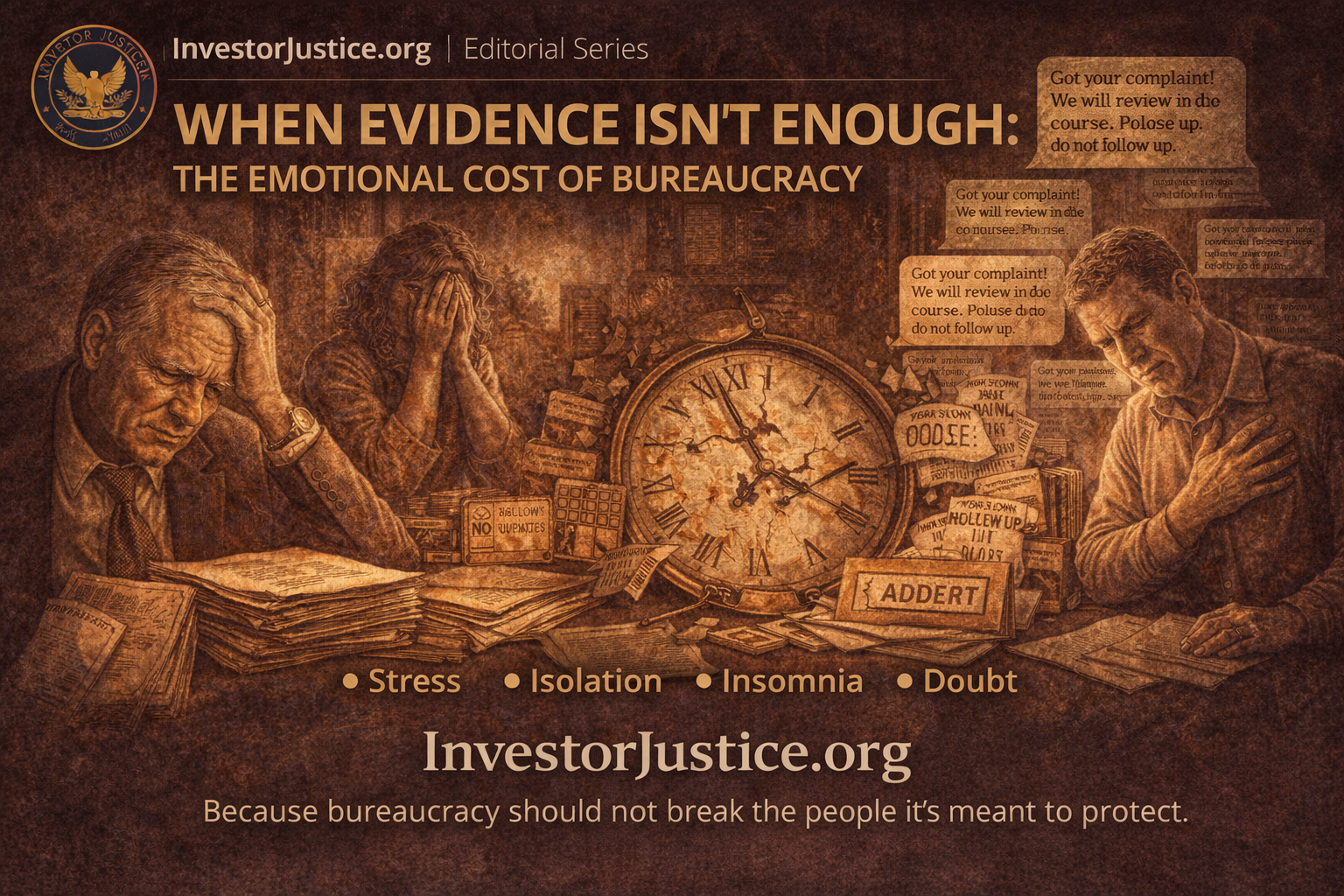
When a platform engages in evasion, manipulation, or tactical stalling, the damage is not limited to the regulator’s docket. It falls, disproportionately on the claimant, often someone who has already experienced financial and emotional harm.
Delay as a Tactic, Not an Accident
Companies under investigation often employ delay as a strategy:
- Refusing to provide full account records
- Raising jurisdictional questions
- Routing communication through offshore affiliates
- Responding only at the last possible moment to regulatory deadlines
These tactics do not typically change the eventual outcome, especially when the evidence is strong. But they extend the timeline, drag out resolution, and multiply the emotional and material cost for the harmed party.
Why This Is Especially Harmful for Retirement-Age Consumers
For older investors, delay is not merely inconvenient, it's harmful:
- The longer restitution is delayed, the greater the financial vulnerability
- Stress compounds, especially when medical or housing decisions hang in the balance
- Trust in the system erodes, leading to isolation, anxiety, and in some cases, silence
A respondent may eventually lose their case but they’ve already won something if they’ve bought more time at the claimant’s expense.
What Regulators Must Recognize
Regulators like DFPI cannot always prevent gamesmanship, but they can:
- Escalate sooner when bad-faith patterns repeat
- Shorten response windows when the respondent has a known history of delay
- Clarify enforcement posture publicly to discourage performative cooperation
Delay is not always within a regulator’s control. But when a respondent is already known to obstruct, continued patience can become its own form of complicity.
The Takeaway
When enforcement is delayed by respondent manipulation, even if that manipulation ultimately fails, the harm is real, the impact is cumulative, and the human cost is unacceptable.
It’s time to stop pretending that delay is passive.
For those already harmed, every extra day is a consequence.
InvestorJustice.org
Because accountability delayed is justice denied.