Table of Contents
InvestorJustice.org | Regulatory Timing Series
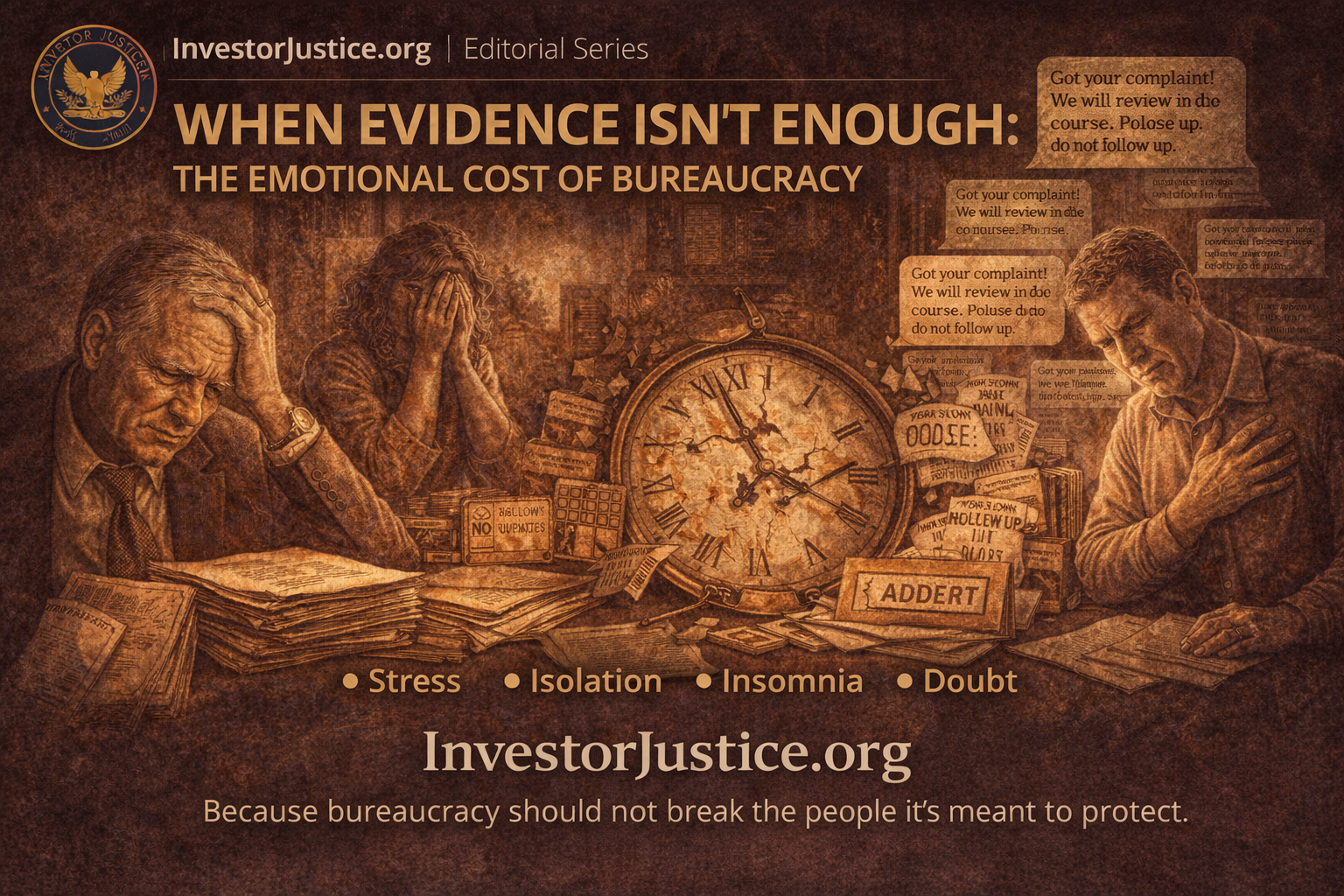
As of Wednesday, January 7, we are only halfway through the first full workweek of the new year. But for consumers, especially retirement-age victims of financial harm, the silence is already hard to bear.
This is not just impatience. It is the recognition that regulatory timeframes and human timeframes are not the same and when older consumers are involved, the cost of delay is never theoretical.
Why the Silence Feels Heavy
DFPI and similar agencies often work through multiple internal steps before any public enforcement becomes visible. These steps can include:
- Legal review and memo finalization
- Cross-division coordination
- Ongoing respondent evaluation
- Demand letter or subpoena preparation
But when a respondent has a documented history of delay, evasion, and misrepresentation, continued silence can feel less like preparation and more like a repeat of missed moments from the past.
What Changes When Respondents Have a Track Record
When a platform:
- Advertised misleading APRs,
- Refused to provide records,
- Cited offshore affiliates to avoid jurisdiction,
- Or evaded a prior round of regulatory scrutiny...
...then extended niceties are no longer warranted.
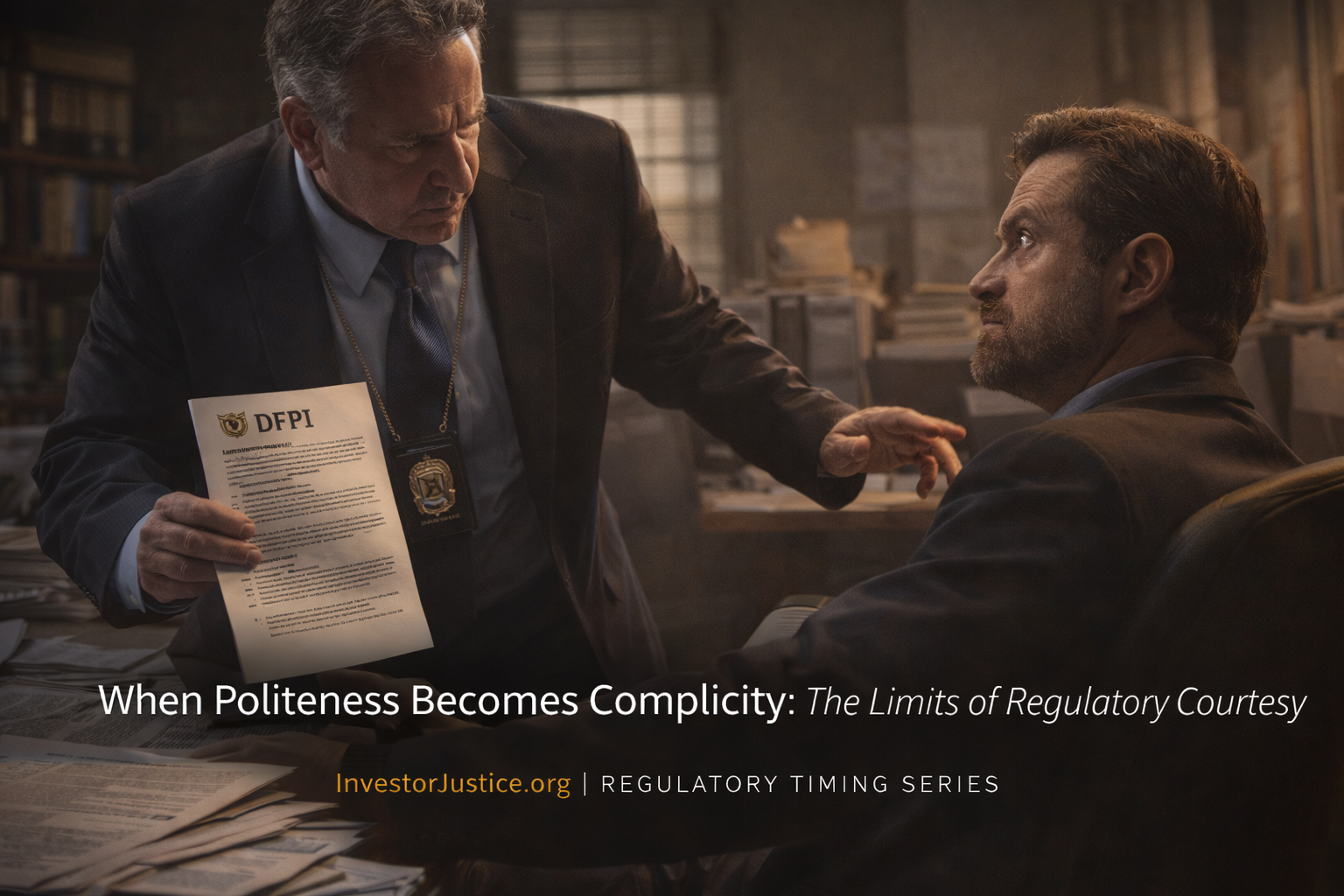
Regulators are not obligated to pretend it’s the first offense. When a respondent has already demonstrated a pattern of bad-faith engagement, regulators are free and arguably duty-bound to shift posture.
January Is Not Just a Reset, It’s a Test
The new year offers agencies a moment to correct course, reassert standards, and send a clear message:
Silence is not infinite discretion.
Each day that passes without action:
- Delays potential restitution,
- Shields a platform from public scrutiny,
- Undermines deterrence,
- And signals to victims that documentation alone is not enough.
The Takeaway
This is the first full week of 2026.
That means it’s still early but not too early to act. Especially when the harm is known, the facts are documented, and the respondent has already shown their cards.
The clock started long before January.
And justice delayed too long becomes trust destroyed.
Now is the moment to prove the process works.
Not just in private but in public.