Table of Contents
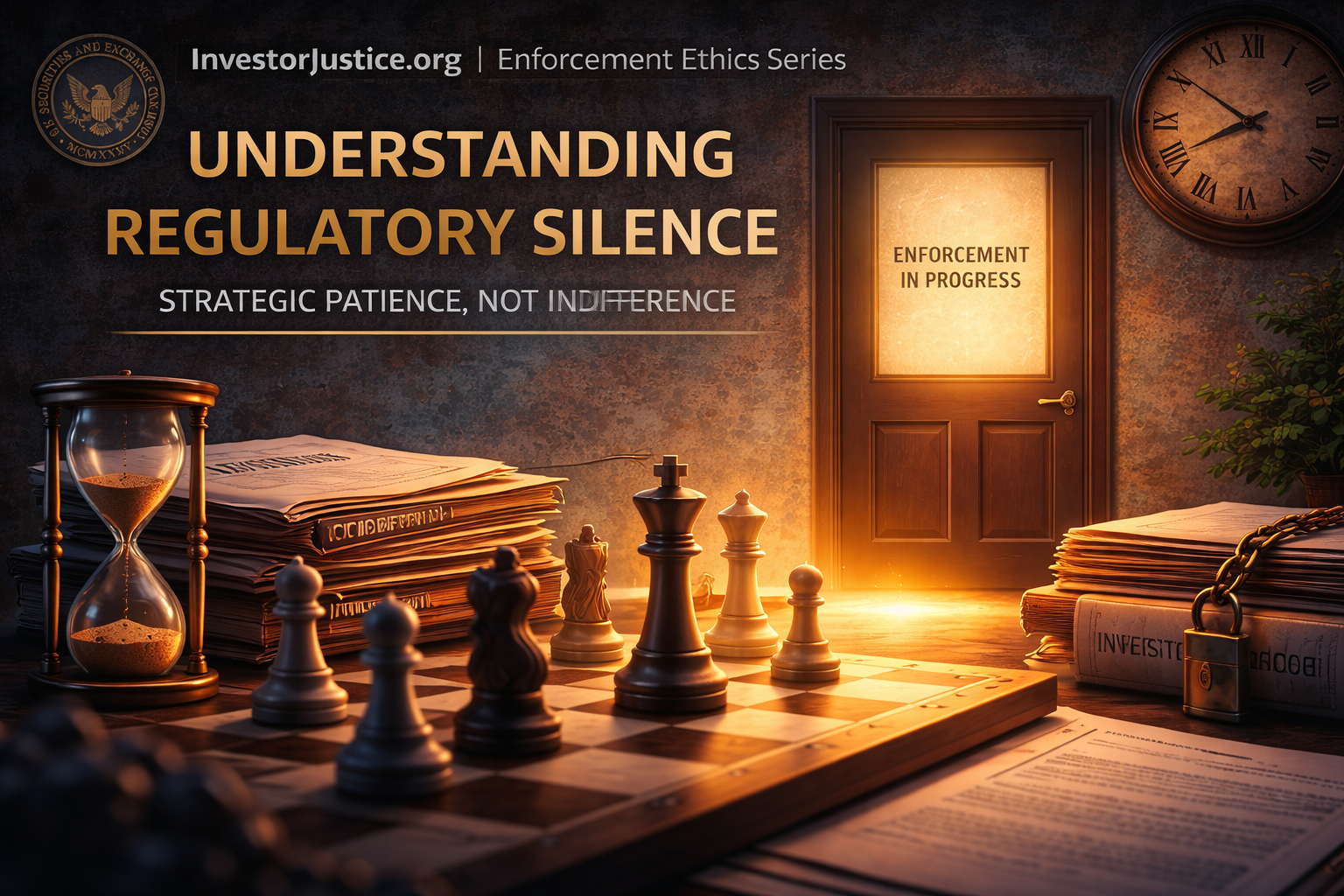
InvestorJustice.org | Enforcement Ethics Series
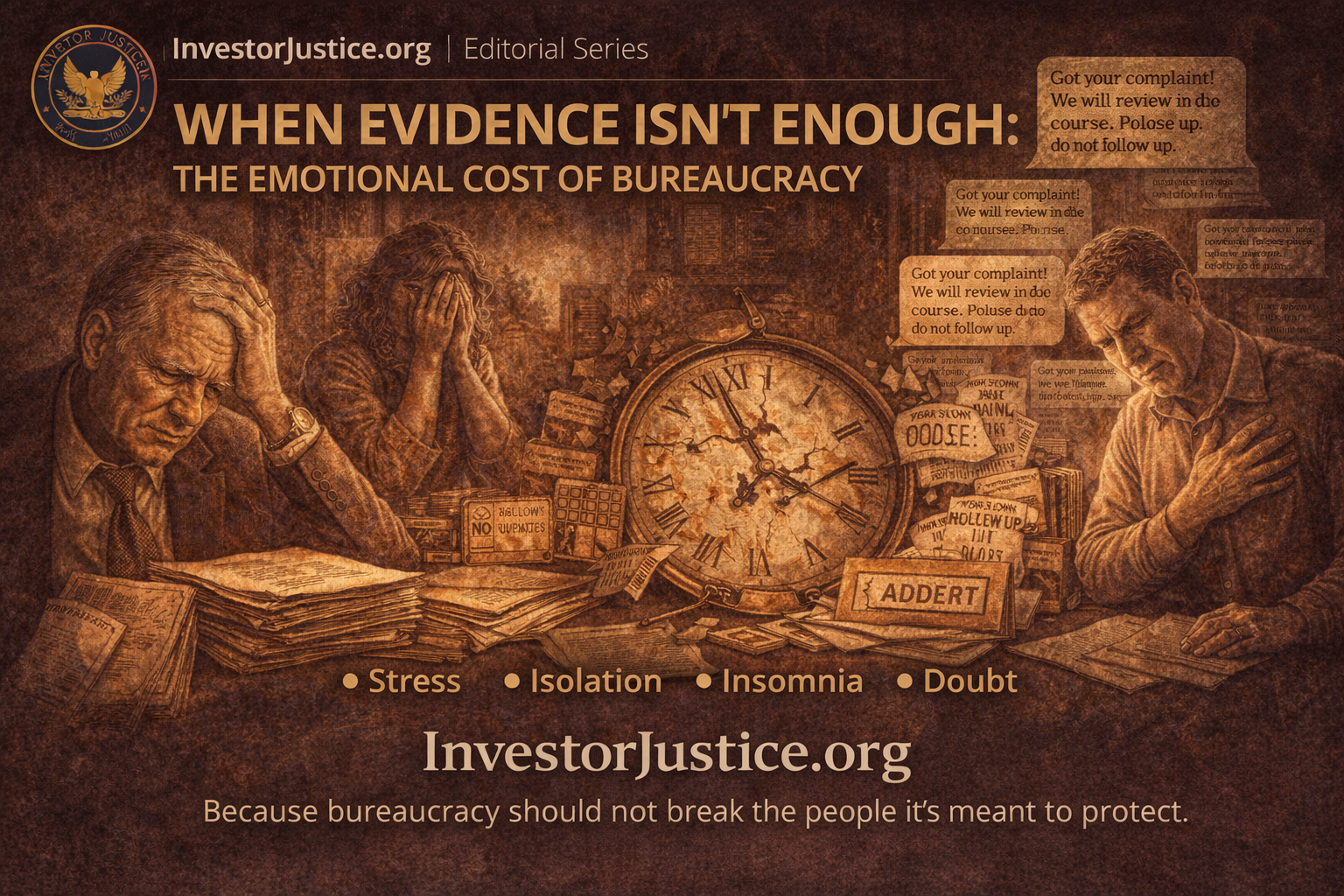
For many consumers waiting on justice, the most difficult part isn’t the harm, it’s the silence that follows.
Whether you’re reporting misconduct, requesting records, or hoping for regulatory action, the waiting period can feel like abandonment. Especially when you’ve already done everything right.
But here’s the truth:
Regulatory Timelines Are Not Human Timelines
Agencies move slowly not because they don’t care but because enforcement is procedural, legal, and often political.
Each stage, from intake to review to enforcement, happens behind closed doors.
And once an issue is escalated to legal staff, updates stop altogether.
This is normal. But it’s also deeply frustrating for the people most affected.
What You Can’t See (But Should Understand)
If you're hearing nothing, here are several common and often positive explanations:
- The regulator is gathering leverage (e.g., drafting subpoenas, coordinating with other agencies, or evaluating the full scope of harm).
- The respondent is resisting behind the scenes, stalling, disputing, or negotiating, which slows things down but also confirms there's pressure.
- Your case may be part of a broader pattern, and regulators may be building a collective strategy instead of acting on one case alone.
None of this makes the waiting easier.
But it does explain why long silences often correlate with strong cases not ignored ones.
Why Friday Silence Feels Heavier
End-of-week lulls create emotional weight.
If nothing happens by Friday afternoon, the next realistic window is Monday and that can feel like another lifetime when you’re already carrying harm.
But Fridays can also be prep days:
- Review memos are finalized
- Enforcement meetings are held
- Next-week decisions are queued
So even when nothing appears to move publicly, the gears may be turning.
If You’re in the Quiet
If you're waiting on a regulator, and you've documented your case well:
✅ Don’t assume the worst
✅ Don’t flood them with repeat messages
✅ Do stay organized, alert, and ready to respond
Patience isn’t passive.
It’s often the last mile in a long process toward accountability.
The Takeaway
For many consumers, especially those harmed by misrepresentation or delay, the hardest part of the process is the part no one sees.
But if your truth is clear, your case is documented, and your harm is real, enforcement is still possible even in silence.
You are not forgotten.
You are part of the shift.
And the clock is still ticking.
Because enforcement should be visible — even when it’s quiet.