
Table of Contents
InvestorJustice.org | Senior Protection Series
Retirement-age Americans face a problem few policymakers fully appreciate: financial harm worsens with time in ways that can never be undone.
When a financial platform misrepresents risk, delays account resolution, or hides behind offshore corporate structures, seniors are not merely inconvenienced, they are systemically disempowered.
This article outlines why regulatory delay is not neutral when retirement-age Californians are affected. It is not procedural.
It is harmful.
Seniors Experience “Irreversible Harm Curves”
Unlike younger consumers, seniors:
- cannot “earn back” unexpected losses through future income,
- cannot afford to wait years for legal or regulatory resolution,
- often lack the capacity to navigate multi-jurisdictional or cross-border processes,
- and cannot tolerate prolonged uncertainty without consequences to their health and livelihood.
Each month without resolution imposes compounding harm:
- Lost financial planning ability — decisions about housing, care, and insurance cannot be made.
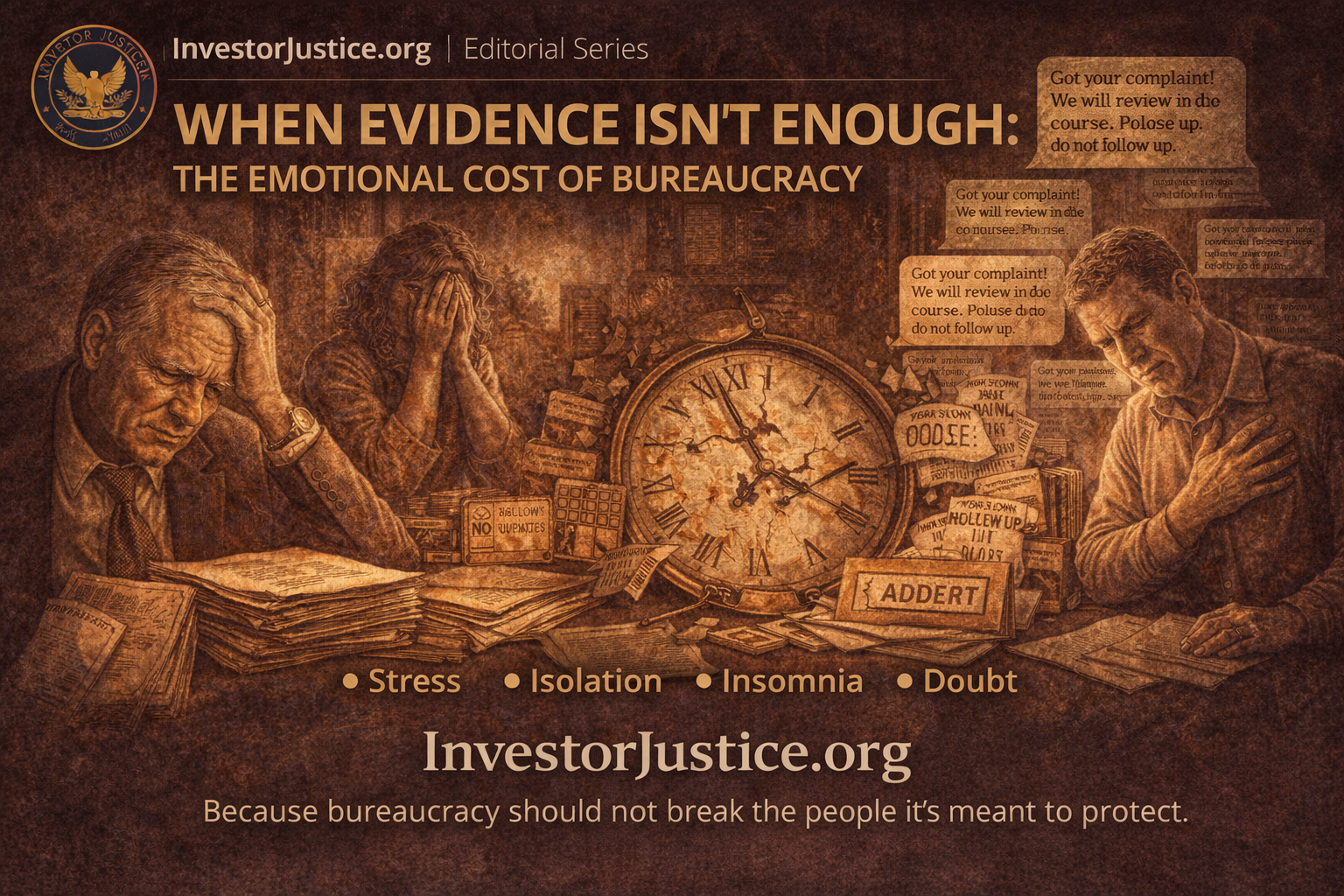
- Increased stress — uncertainty raises cortisol and blood pressure, especially among medically vulnerable individuals.
- Erosion of trust — financial confidence, built over a lifetime, is destroyed by opacity and silence.
- Risk of medical or mental health decline — delays trigger cascading effects on personal well-being and independence.
This is not theoretical.
This is lived reality and it is measurable in outcomes.
Offshore Evasion Techniques Disproportionately Harm Seniors
Many fintech and crypto platforms now operate behind multi-entity structures designed to delay accountability.
Common tactics include:
- Citing offshore affiliates to deflect jurisdiction,
- Claiming consumer data is “unavailable” or “not retained,”
- Issuing delayed or generic legal responses to regulatory outreach,
- And exhausting individuals with procedural ambiguity.
For a 32-year-old tech-savvy investor, these tactics are frustrating.
For a 72-year-old retiree with limited digital fluency, these tactics are crippling.
This is not “just business strategy”, it’s a targeted structural disadvantage.
Regulators already have the discretion to classify this pattern as:
- Evasion
- Non-cooperation
- Risk to vulnerable populations
They do not need a new law.
They need the will to act.
What Regulators Can Do Today (No New Laws Required)
Most state financial regulators, including the California Department of Financial Protection and Innovation (DFPI), already have:
- ✅ Statutory discretion to prioritize vulnerable populations
- ✅ Authority to demand records from any entity operating in-state
- ✅ Power to issue cease-and-desist or suspension orders
- ✅ Remit to compel restitution or mediation
- ✅ Jurisdictional reach when U.S. banking infrastructure is involved
California Financial Code §90009(c) provides specific mechanisms for enforcement when a company fails to cooperate or respond.
In short:
Protecting seniors from financial abuse is not a jurisdictional dilemma.
It’s a question of regulatory courage.
The Role of Civic Pressure
Organizations like AARP, Gray Panthers, and senior justice coalitions play a critical role but they cannot enforce on their own.
It takes agency action to resolve:
- Disputed account access
- Retirement fund liquidation without consent
- Jurisdictional shell games
- Medical risk driven by prolonged stress
These are not niche edge cases. They are growing.
The Takeaway
Senior investors should not be left to navigate:
- Offshore legal replies,
- Contradictory platform language,
- Long-delay complaint portals,
- Or complete regulatory silence.
Time is not neutral for seniors.
Time is the harm.
Regulatory agencies, especially DFPI, must treat retirement-age complaints as emergency triggers, not routine caseloads.
Because when regulators wait, seniors don’t just lose money.
They lose health, trust, and the ability to plan the years they’ve earned.
Timely regulatory action is not optional.
It is a duty.