
Table of Contents
InvestorJustice.org Editorial
Predatory financial platforms often rely on a familiar, cynical defense:
“The details were in the Terms of Service.”
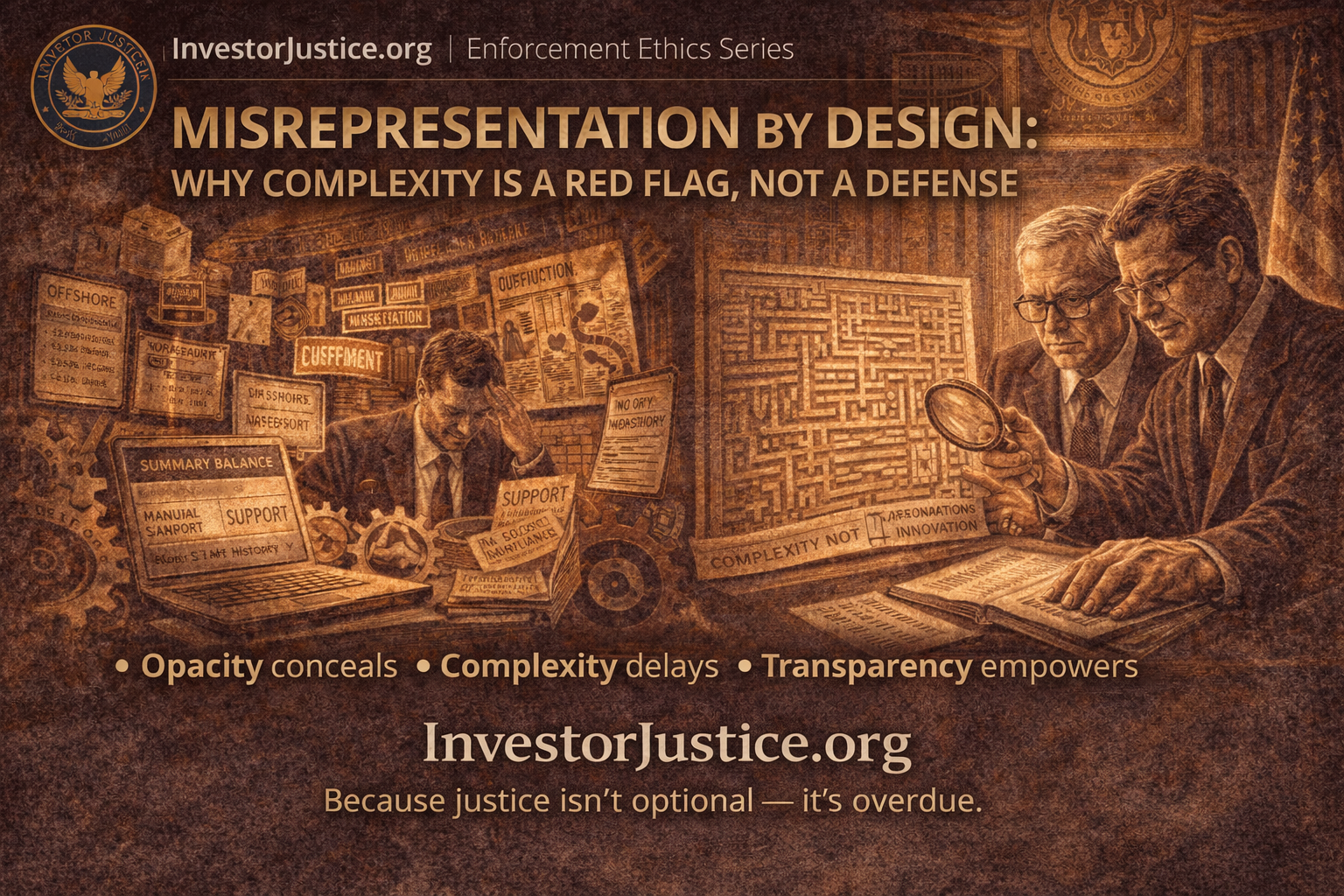
This logic assumes something absurd, that ordinary users will recognize a marketing misrepresentation, ignore the platform’s promises, and immediately dig through 40–200 pages of legal boilerplate to see if the marketing was false.
This is not how consumer protection works.
And regulators across jurisdictions treat this defense as a red flag, not a shield.
Marketing Claims Create Legal Obligations — No Matter What the ToS Says
In U.S. consumer-protection law, one principle is universal:
You cannot advertise one thing and contract for another.
If a platform markets:
- “impossible APRs,”
- “guaranteed returns,”
- “risk-free yield,”
- or any materially false benefit,
then the marketing governs, even if the Terms of Service contradict it.
Regulators and courts treat misleading marketing as:
- a deceptive act,
- an unfair business practice,
- and a violation independent of any contract language.
Terms of Service cannot retroactively legalize deception.
Burying Contradictions in a ToS Is Evidence of Intent
When a company:
- pushes aggressive or unrealistic promises to attract customers,
- then hides disclaimers or contradictory terms hundreds of pages deep,
- and later blames the user for “not reading the legal details,”
that is not a defense, it is evidence of deliberate misrepresentation.
This pattern signals:
- knowledge of the deception,
- attempt to shift responsibility onto the consumer,
- and an intentional mismatch between public promises and private terms.
Regulators treat this as a form of willful concealment.
No Regulator Accepts “The ToS Says…” as a Shield for Fraud
Across major regulatory bodies:
- DFPI,
- SEC,
- CFTC,
- FTC,
- FINRA,
- state attorneys general,
the consensus is absolute:
A Terms of Service agreement cannot override consumer-protection law.
Even if users “agree” to a ToS:
- deceptive marketing,
- omission of material facts,
- or false performance claims
remain fully enforceable violations.
The idea that fine print can erase fraud is one of the oldest and most rejected arguments in consumer law.
“You Should Have Read the ToS” Is a Blame-Shift, Not a Legal Theory
Platforms that weaponize their ToS reveal several things about themselves:
- They know the marketing cannot stand on its own.
- They know users trust the representations, not the footnotes.
- They know regulators view contradictions as intent to mislead.
And most tellingly:
No ethical company hides the truth and then blames users for believing their advertising.
This is the core of predatory fintech behavior.
Retirees Are Especially Vulnerable to This Tactic
Retirement-age investors:
- trust official claims more than anonymous disclaimers,
- do not have the time or financial recovery window to detect misdirection,
- and disproportionately rely on the face-value truth of marketed features.
Platforms that target retirees with unrealistic marketing and then retreat to their ToS are not merely deceptive, they are exploiting a protected population.
Regulators know this.
And they treat senior harm as an aggravating factor.
The Takeaway
Terms of Service cannot excuse:
- misleading yield claims,
- contradictory affiliate statements,
- offshore evasion,
- or refusal to provide account records.
Marketing creates the expectation.
The company is bound by the expectation.
And no amount of fine print can erase deception.
Platforms that rely on their ToS to justify misrepresentation are not protecting themselves, they are confessing the deceit.